Ethereum Price Prediction Potential Surge After Fusaka Upgrade
Fusaka Upgrade Overview
Ethereum is set to roll out the Fusaka upgrade on December 3, 2025, introducing PeerDAS technology. With PeerDAS, network nodes will only need to store one-eighth of blobs, while Layer 2 Rollups could see scalability increase by up to eight times. This marks Ethereum’s second major network upgrade this year, following the Pectra upgrade in May.
Execution Layer and Consensus Layer Enhancements
Fusaka integrates updates to the Osaka execution layer and the Fulu consensus layer, advancing Ethereum’s scalability, security, and user experience. These enhancements support higher transaction throughput, deliver strong benefits for Layer 2 solutions, and help reduce Rollup operating costs by increasing blob capacity.
PeerDAS Technology Breakthrough
Peer Data Availability Sampling (PeerDAS) stands as Fusaka’s core innovation, transforming node management of blobs. Nodes will store just one-eighth of the network’s blobs, cutting storage needs by about 80%, while distributed sampling ensures complete data availability. For Layer 2 Rollups, PeerDAS lowers blob fees, improves transaction processing capacity, and drives down operational costs.
Security and Infrastructure Upgrades
Fusaka also delivers upgrades to network security and infrastructure. This includes EIP-7918, which aligns blob fees with network congestion, and a single transaction gas limit set at 2^24 to mitigate denial-of-service risks from large transactions. Native support for secp256r1 signatures enables Passkey authentication. This paves the way for faster institutional adoption.
Potential Market and Price Impact
Fusaka emphasizes infrastructure scalability rather than direct profit generation, in contrast to Pectra’s focus on staking and account abstraction. Over the long term, this upgrade is poised to boost Ethereum’s competitiveness across both L1 and L2 ecosystems, attract greater institutional investment, and potentially provide ETH with strong upward momentum.
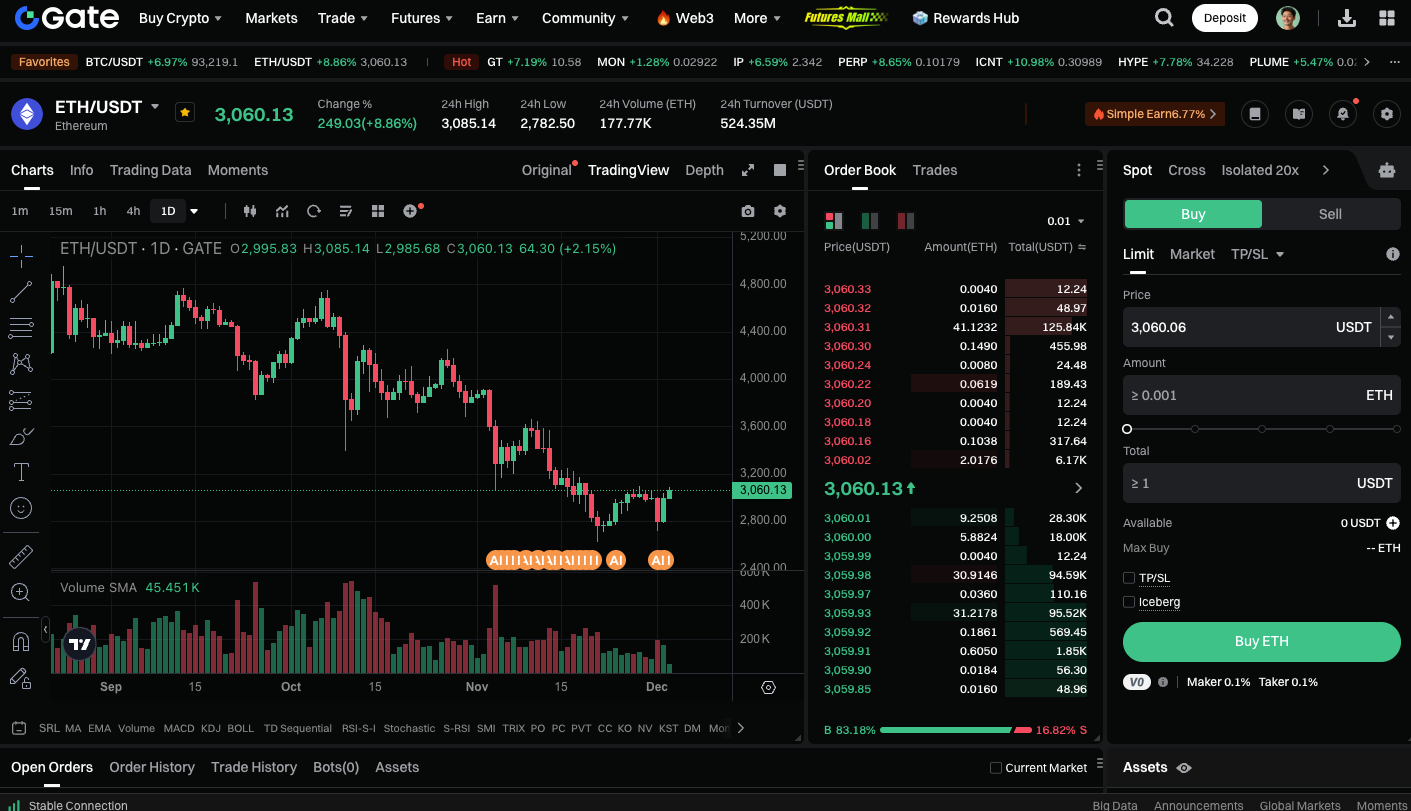
At the time of publication, ETH has broken through the $3,000 mark and could continue its upward trend, potentially testing the $3,200–$3,300 resistance range.
Start ETH spot trading now: https://www.gate.com/trade/ETH_USDT
Summary
The Fusaka upgrade boosts Ethereum’s data processing efficiency, lowers barriers for node operators, and strengthens network security. For investors, this upgrade positions ETH for potential gains, especially as Layer 2 Rollups expand and institutional adoption accelerates, supporting a bullish market outlook.
Share
Content


Related Articles

2025 BTC Price Prediction: BTC Trend Forecast Based on Technical and Macroeconomic Data

Pi Coin Transaction Guide: How to Transfer to Gate.com

Flare Crypto Explained: What Is Flare Network and Why It Matters in 2025

How to Use a Crypto Whale Tracker: Top Tool Recommendation for 2025 to Follow Whale Moves

What is N2: An AI-Driven Layer 2 Solution