Bitcoin Price Forecast: Why the Market Expects BTC to Reach $143,000 in 2026
Current Bitcoin Price and Market Environment
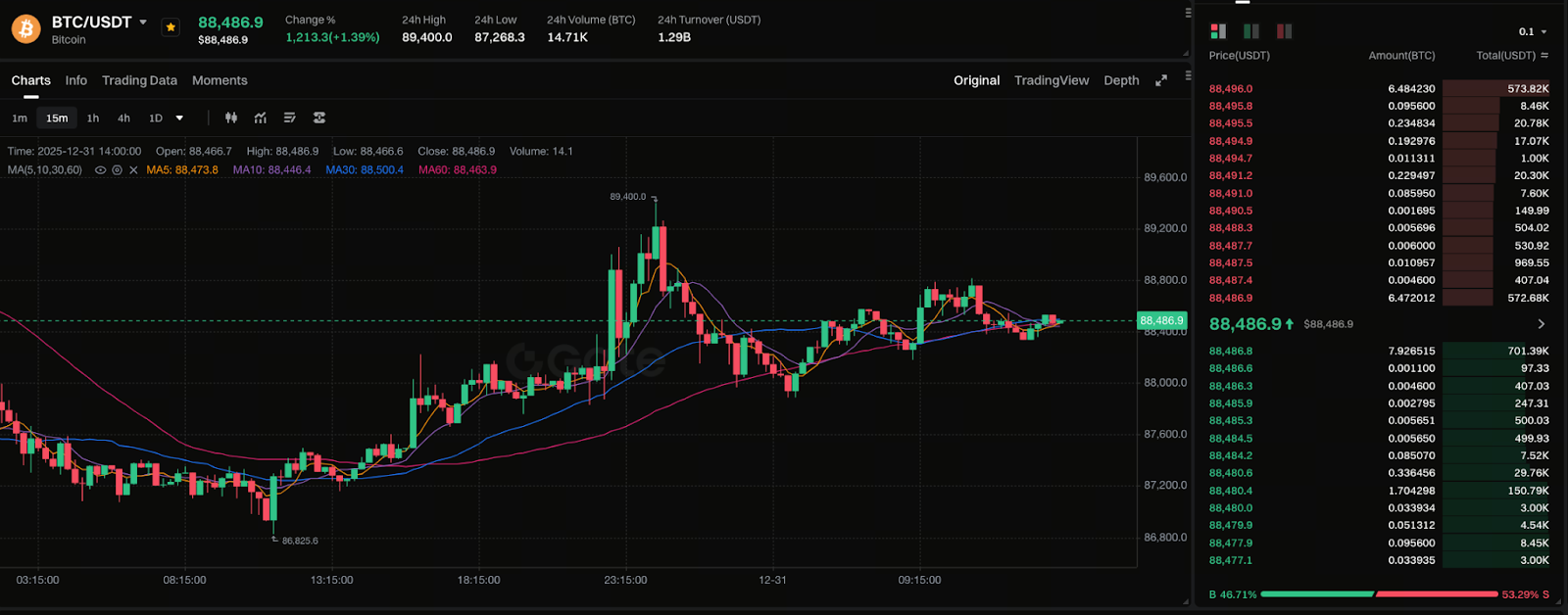
Chart: https://www.gate.com/trade/BTC_USDT
Bitcoin is currently consolidating near the $80,000 mark. Unlike earlier bull markets dominated by retail investors, this cycle is more clearly shaped by institutional capital, ETF products, and macro-level liquidity conditions. While price swings remain significant, market depth and liquidity have both improved noticeably.
Overall, Bitcoin remains in a long-term upward channel, though it has entered a short-term consolidation phase at elevated levels.
Core Logic Behind the $143,000 Price Target
The $143,000 price target for 2026 is grounded in three main factors:
- Bitcoin’s total supply is fixed, and new issuance drops sharply after each halving;
- Spot ETFs offer compliant, convenient channels for long-term capital allocation;
- Institutions are increasingly viewing Bitcoin less as a “high-risk speculative asset” and more as a “long-term value allocation.”
Together, these drivers are naturally raising the medium- and long-term price baseline.
Long-Term Impact of ETFs and Institutional Capital
ETFs have fundamentally transformed Bitcoin’s capital structure. Compared to short-term trading flows, ETF investments are more passively managed and held for the long term. This type of capital does not frequently move in and out of the market, providing stronger support for prices on the downside. If ETF assets continue to grow over the next one to two years, Bitcoin’s price could steadily climb toward $143,000 without requiring extreme market sentiment.
Bitcoin Cycles and Historical Price Comparisons
Looking back, after each halving cycle, Bitcoin has followed a pattern of rallying, consolidating at highs, and then breaking out again.
What sets this cycle apart is the significantly higher level of institutional participation, which generally leads to a slower but more sustained upward trend.
From a cycle perspective, 2026 falls in the latter stages of this cycle, supporting the timing of a move toward $143,000.
Technical Structure and Key Price Ranges
Technically, the market is focused on the following key ranges:
- $70,000–$75,000: Long-term structural support
- $100,000: Psychological and trend-defining level
- $130,000–$145,000: Medium- to long-term target range
If Bitcoin can hold above $100,000, a move to $143,000 would likely be a natural trend extension rather than a speculative bubble.
Potential Risks and Uncertainties
It is crucial to recognize that $143,000 is not guaranteed. Potential risks include:
- Significant tightening of global liquidity
- Broad-based valuation corrections across risk assets
- Sustained net outflows from ETFs
- Sudden shifts in policy or regulatory environments
Any of these factors could delay the price trajectory or trigger a deeper correction.
Summary: A Rational Perspective on 2026 Expectations
The $143,000 target is not an overly optimistic projection. Instead, it represents a moderately optimistic outlook based on improved supply-demand dynamics and the long-term influx of capital. Investors should focus on whether the broader trend remains intact, rather than short-term price movements.
Share
Content
Current Bitcoin Price and Market Environment
Core Logic Behind the $143,000 Price Target
Long-Term Impact of ETFs and Institutional Capital
Bitcoin Cycles and Historical Price Comparisons
Technical Structure and Key Price Ranges
Potential Risks and Uncertainties
Summary: A Rational Perspective on 2026 Expectations


Related Articles

2025 BTC Price Prediction: BTC Trend Forecast Based on Technical and Macroeconomic Data

Flare Crypto Explained: What Is Flare Network and Why It Matters in 2025

How to Use a Crypto Whale Tracker: Top Tool Recommendation for 2025 to Follow Whale Moves

Pi Coin Transaction Guide: How to Transfer to Gate.com

What is N2: An AI-Driven Layer 2 Solution