In a traditional internet social environment, users’ chat records, images, and private data are usually stored on centralized servers either in plaintext or in a form that the platform can decode. This means platform operators, and even potential attackers, may be able to access users’ private communications. As awareness of Web3 privacy grows, users increasingly need a way to keep their existing social relationships while gaining real control over their own data.
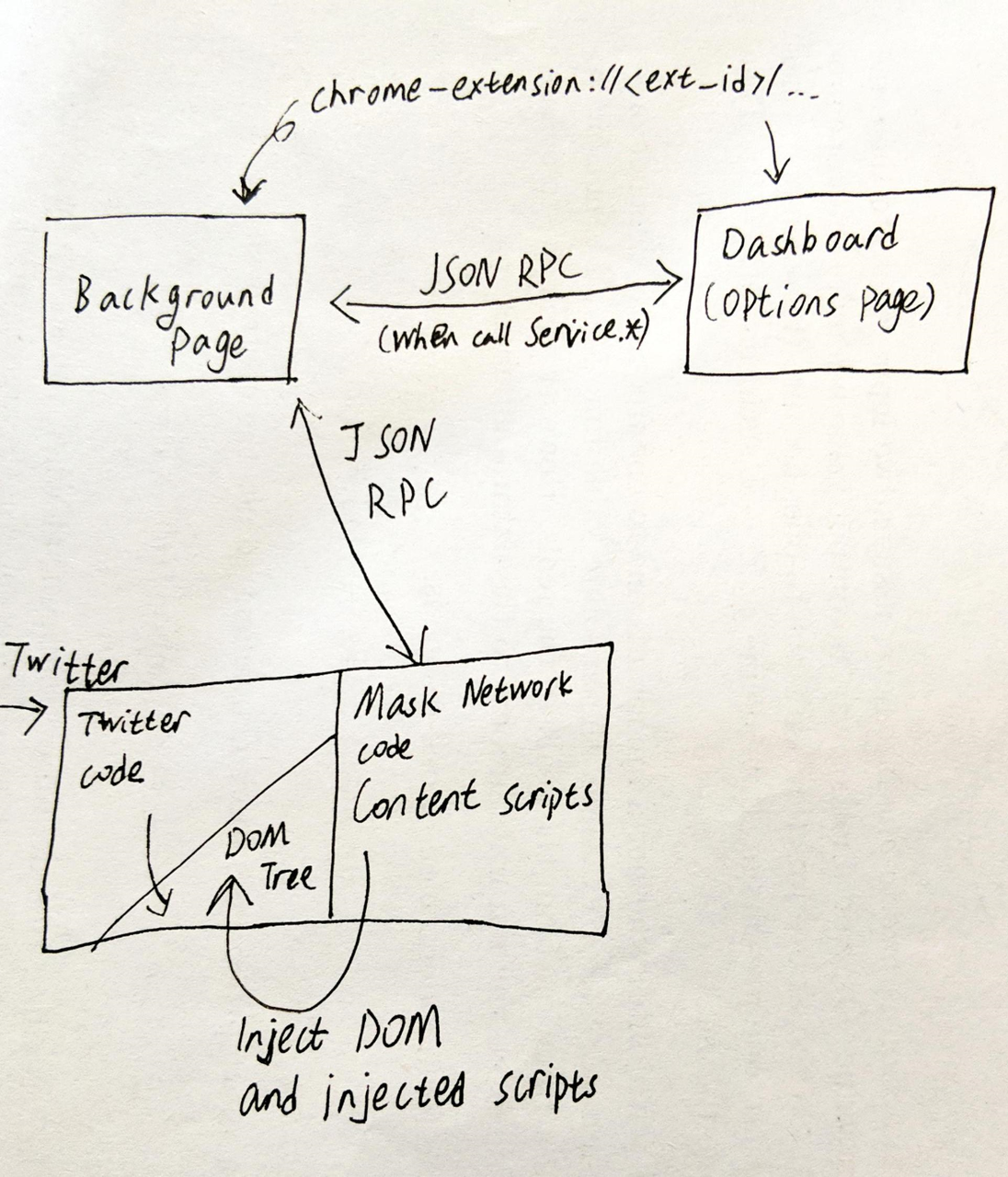
Against this backdrop, Mask Network acts as a privacy protection layer. It does not attempt to change the underlying code of existing social platforms. Instead, it uses middleware technology to add an encryption layer on top of the application layer. This technical approach ensures that social platforms only function as an untrusted intermediary and ciphertext storage layer, while the actual power to decrypt messages belongs entirely to the private key held by the user.
The Core Process Behind Mask Network’s Encrypted Transmission
Mask Network’s transmission logic is built around a carefully designed hybrid encryption protocol, mainly divided into the following four key steps:
-
Identity Initialization and Key Generation
When a user installs the Mask extension and creates or imports a wallet, the system generates a public and private key pair based on the Secp256k1 curve. The public key is automatically synchronized to Mask’s decentralized identity, or DID, network for others to retrieve, while the private key is kept strictly within the local security environment of the user’s device and is never uploaded.
-
Sender-Side Encryption Processing, Obfuscation and Packaging
When a user writes an encrypted tweet on Twitter, the process works as follows:
-
Symmetric Content Encryption: The system randomly generates an AES key and uses it to encrypt the tweet, images, and other content into ciphertext.
-
Asymmetric Key Encryption: The sender retrieves the public key of the recipient, or a specific group, and uses that public key to encrypt the AES key mentioned above.
-
Publishing the Ciphertext: Mask converts these encrypted data packets, including the encrypted content and wrapped key, into a string of characters that looks like random code, then automatically inserts it into the social platform’s input box for publishing.
-
A social platform such as Twitter simply distributes this character string as an ordinary text post. Because the platform does not have the private key needed for decryption, from the perspective of its servers, it is only an unreadable hexadecimal data stream.
-
Recipient-Side Decryption and Restoration
When the target recipient refreshes the page, the Mask extension automatically scans the page content:
-
Ciphertext Recognition: The extension identifies the specific encryption marker.
-
Private Key Decryption: The extension calls the recipient’s local private key to unwrap the encrypted AES key.
-
Plaintext Restoration: It uses the decrypted AES key to decrypt the main content and displays the plaintext directly in the user’s social interface.
Key Technical Components: GunDB and IPFS
To support decentralized and censorship-resistant transmission, Mask Network also uses distributed storage technologies:
-
GunDB: A decentralized graph database used to synchronize users’ public key information and certain encrypted indexes without relying on centralized servers.
-
IPFS/Arweave: When users send large files or images, Mask first uploads them to a decentralized storage network and publishes only the encrypted storage hash on the social platform, helping ensure that the data cannot be easily removed by the platform.
Conclusion
Mask Network’s encrypted message transmission mechanism successfully creates the equivalent of a safe inside a transparent glass room, the Web2 social platform. By combining mature cryptographic algorithms, including AES and Secp256k1, with advanced decentralized storage such as IPFS, it strikes a balance between user experience and security. Users do not need to understand the complex underlying logic to enjoy end-to-end privacy protection, and this is exactly where Mask Network’s core competitiveness as a Web3 gateway lies.
FAQs
Does Mask Network store my chat history?
No. Mask Network follows a non-custodial principle. Message content is published on third-party social platforms, while the private key needed for decryption is stored on your local device. Mask’s official team can neither view nor store your plaintext records.
Why does the encrypted information I post look like a string of random characters?
That is exactly what encryption is meant to do. Users who have not installed the extension, users without decryption permission, and the platform itself can only see the encrypted hexadecimal characters. Only authorized users can view the original information through the extension.
Can I recover encrypted messages if I lose my private key?
No. Because Mask Network uses end-to-end encryption and does not store users’ private keys, once the private key is lost, no one can decrypt previously published encrypted content. Be sure to back up your mnemonic phrase or private key properly.
Does this kind of encrypted transmission incur Gas fees?
Sending encrypted text and images alone does not require Gas fees, because it mainly uses the text interface of the social platform. However, when you send interactions involving onchain assets, such as encrypted red packets or NFTs, you need to pay the Gas fees required by the relevant chain.