Users follow the SPC token because Space is more than just a trading platform—it's an on-chain ecosystem built around prediction markets, order matching, result trading, and user incentives. Understanding SPC requires attention to how it supports user participation, platform revenue, and market activity.
This topic typically covers token functionality, the role of prediction markets, trading fees, incentive mechanisms, circulation methods, and economic models.
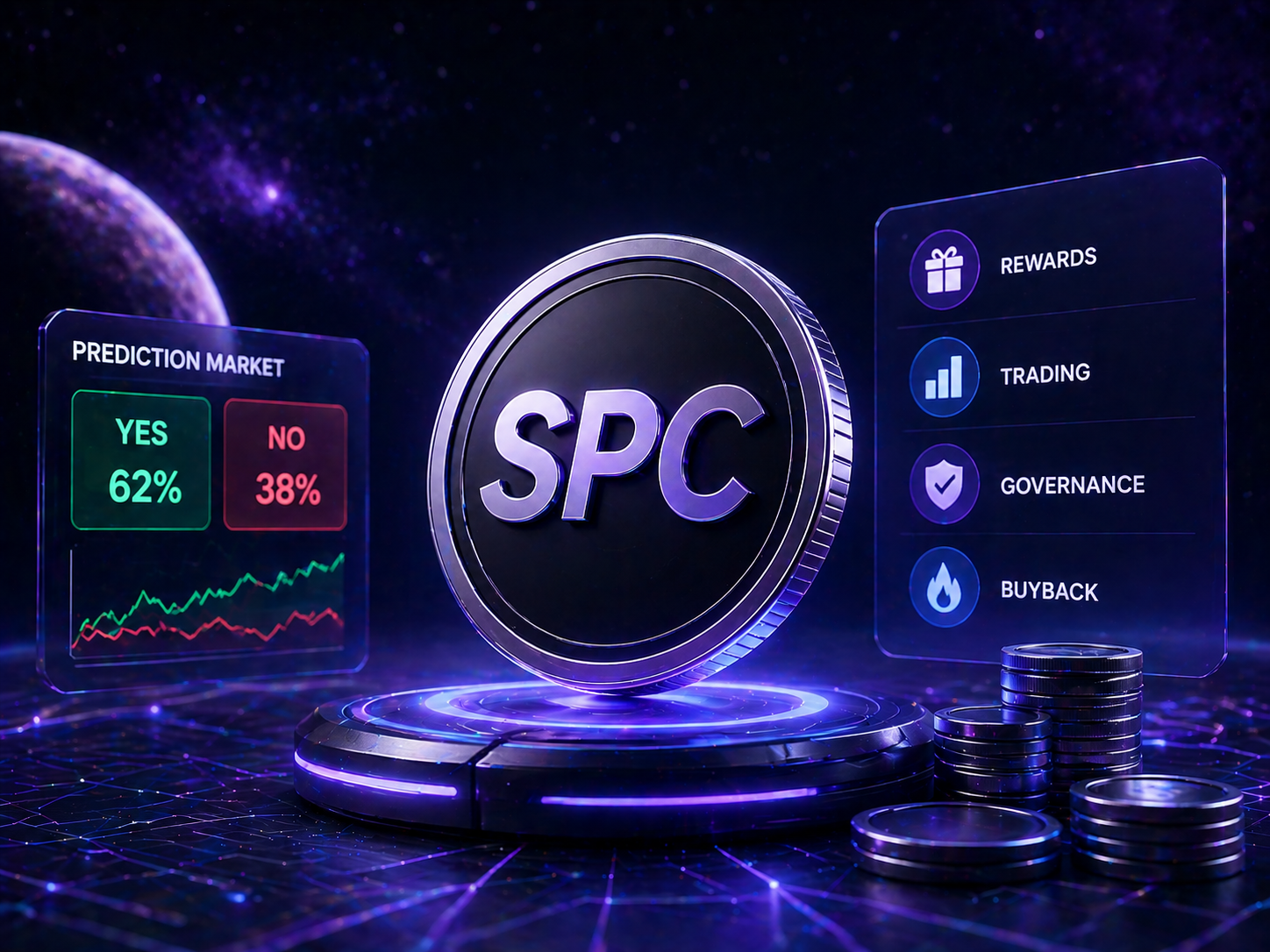
What Is the SPC Token
SPC is the native token of the Space ecosystem, connecting prediction market trading, user incentives, and platform value return mechanisms.
According to Space’s official documentation, SPC is not designed to require users to buy, hold, or stake tokens in order to use the product. Instead, it aligns token value with platform performance while keeping participation open to retail investors. The documentation also notes SPC is used for rewards, recommendations, trading competitions, and access to certain exclusive markets.
Structurally, SPC is not the only gateway to prediction markets. Space enables users to access the platform without mandatory token interaction, lowering the participation barrier. However, SPC plays a more defined role in incentives, exclusive markets, and ecosystem activities.
This approach means SPC functions as an ecosystem-enhancing token rather than an access-restricting token.
What Are SPC’s Core Functions
SPC’s core functions include reward incentives, referral rewards, trading competitions, exclusive market access, and platform value association.
Space’s official documentation lists reward scenarios such as airdrop credits, referral rewards, and trading competitions. Users can earn credits through platform activities to qualify for airdrops, or receive rewards by referring new users who deposit USDC and trade.
| Function Type |
Specific Role |
Ecosystem Impact |
| Airdrop Incentives |
Credits accumulated by user activity |
Boosts early participation |
| Referral Rewards |
Encourages users to invite new traders |
Expands user base |
| Trading Competitions |
SPC as prize pool |
Increases market activity |
| Exclusive Markets |
SPC participation required in some markets |
Broadens token use cases |
| Revenue Mechanism |
Linked to platform performance |
Establishes value return logic |
These features do not require all users to use SPC, but increase token utility among active users, traders, and ecosystem participants.
This design strikes a balance between “low-barrier usage” and “token value capture.”
SPC’s Role in Prediction Markets
SPC’s role in prediction markets is to enhance user participation and connect platform economic performance.
Space is described as a decentralized prediction market platform built on Solana, allowing users to trade outcomes of real-world events across crypto, politics, sports, technology, and culture.
In prediction markets, users express their judgment by buying shares of different outcomes. Space documentation explains that market prices reflect collective estimates of event probabilities—for example, a YES share priced at $0.35 indicates the market believes there is about a 35% chance of that outcome.
SPC does not replace the core trading logic of prediction markets, but adds a layer of engagement through rewards, activities, and exclusive markets. The heart of prediction markets remains event trading, while SPC boosts market activity and value return.
This positioning makes SPC an incentive and expansion tool within the prediction market ecosystem.
How SPC Is Used for Trading Fees and Incentives
SPC’s connection to trading fees is primarily through platform revenue return and incentive mechanisms.
Public disclosures state Space’s total token supply is 1,000,000,000, and it features an income flywheel mechanism: 50% of platform revenue is used to buy back and burn tokens, while the remaining 50% goes to the protocol treasury.
This model links platform trading performance to token economics. Users generate trading activity in prediction markets, the platform earns revenue, part of which is used to buy back and burn tokens, while the remainder goes to the protocol treasury for ecosystem growth or platform operations.
SPC’s economic model depends not only on market narratives but also on platform trading volume and revenue. The more active the trading, the more pronounced the income flywheel effect.
SPC Circulation in the Ecosystem
SPC circulates within the Space ecosystem through user activity, reward distribution, trading competitions, and exclusive markets.
Users qualify for rewards by participating in platform activities, trading, or referrals. Some may receive SPC via airdrops, competitions, or other incentives. SPC can then be used for exclusive markets or ecosystem activities. The platform’s revenue mechanism affects token supply via buybacks and burns.
SPC circulation is multidirectional, connecting user growth, trading behavior, and platform revenue. Retail investors can participate directly in prediction markets, while active users may gain more ecosystem equity through SPC.
This circulation model avoids the barrier of “having to buy tokens to use the product,” while retaining SPC’s role in deep engagement scenarios.
Note that Space’s official documentation discloses SPC’s functions and uses, but does not specify full token allocation details. Confirmed information includes a total supply of 1,000,000,000 tokens, with 50% of platform revenue used for buyback and burn, and 50% allocated to the protocol treasury.
How the SPC Economic Model Impacts Market Operations
The SPC economic model connects prediction market usage, platform revenue, and token supply changes.
Public information confirms SPC’s total supply is 1,000,000,000 tokens. Its income flywheel mechanism splits platform revenue: half is used for buyback and burn, half for the protocol treasury.
| Economic Model Element |
Public Information |
Role |
| Total Supply |
1,000,000,000 tokens |
Defines token base scale |
| Buyback and Burn |
50% of platform revenue |
Reduces circulating supply |
| Protocol Treasury |
50% of platform revenue |
Supports ecosystem and platform development |
| User Incentives |
Airdrop, referral, competition |
Boosts user participation |
| Exclusive Markets |
SPC participation required in some markets |
Broadens token demand |
From a market operations perspective, SPC’s model does not force users to hold tokens; instead, it creates demand through platform revenue, incentives, and exclusive use cases. Space’s documentation emphasizes that requiring users to buy, hold, or stake tokens would limit the user base, so Space allows retail investors to avoid token barriers.
This approach is well-suited to prediction markets, which require broad user participation for market prices to reflect collective expectations.
Summary
SPC is a utility token in the Space prediction market ecosystem, primarily used for rewards, referrals, trading competitions, exclusive market access, and platform revenue return mechanisms. Public information confirms SPC’s total supply is 1,000,000,000 tokens, with 50% of platform revenue used for buyback and burn, and 50% allocated to the protocol treasury. Its economic model does not require users to hold tokens, but links SPC value to platform trading activity while maintaining the openness of prediction markets.
FAQ
What Are the Main Uses of SPC Token
SPC is mainly used for airdrop incentives, referral rewards, trading competitions, and exclusive market access in the Space ecosystem, and is tied to platform performance via the income flywheel mechanism.
What Is the Total Supply of SPC Token
Public information confirms SPC’s total supply is 1,000,000,000 tokens.
How Is SPC Token Allocated
Space’s official documentation does not specify a full token allocation ratio. Public information covers airdrops, referral rewards, trading competitions, exclusive market access, and 50% of platform revenue for buyback and burn, with 50% going to the protocol treasury.
Is SPC Required to Use Space
No. Space’s documentation states the platform does not require users to buy, hold, or stake tokens in order to use the product, avoiding barriers to user participation.
Why Is the SPC Economic Model Important
The SPC economic model links platform trading revenue, buyback and burn, protocol treasury, and user incentives, directly tying token value to prediction market activity.







