Explore crypto news and in-depth articles related to Macroeconomics, covering market updates, data-driven analysis, trend insights, and key developments to help you fully grasp key information about Macroeconomics in the crypto market.
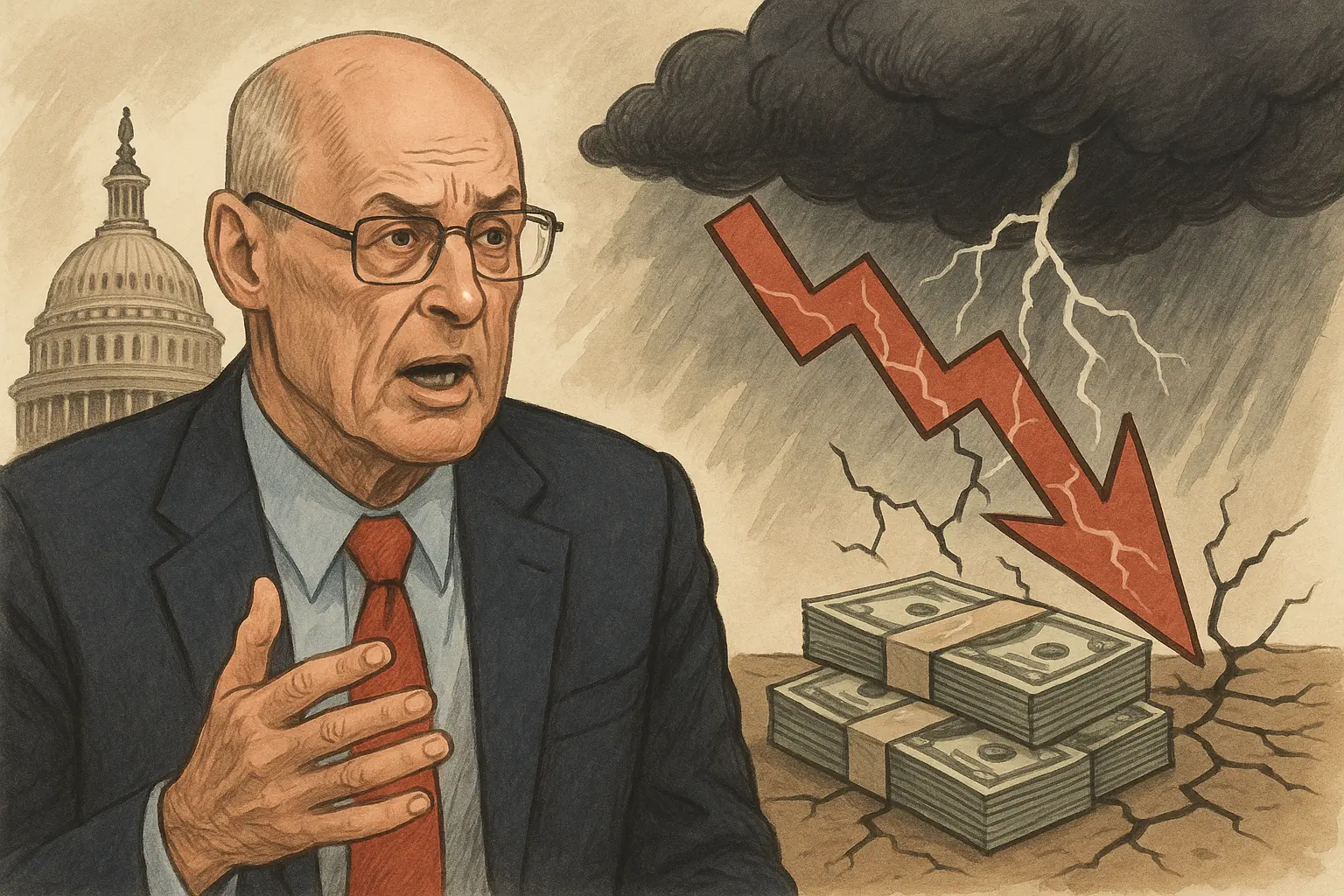
Former U.S. Treasury Secretary Henry Paulson warns of a potential collapse in U.S. Treasury demand, which could destabilize the financial system and erode confidence in the dollar, shifting investments to Bitcoin and gold. Tether may face risks as well.
U.S. stock indices closed higher on April 16, with the S&P 500 reaching a record. Tech stocks surged, particularly within the semiconductor sector and Chinese companies. Crude oil prices rose, while precious metals declined. Analysts offer mixed views on the rally's sustainability amidst geopolitical tensions involving Israel and Lebanon.
The Investment Company Institute reported a $175.81 billion drop in U.S. money market fund assets to $7.64 trillion for the week ending April 15, with significant declines across taxable and tax-exempt funds.
On April 17, South Korea's KOSPI index dropped 4.55 points, while Japan's Nikkei 225 fell by 227.62 points, indicating weakness in major Asian equity benchmarks.
Gate News: According to the latest Gate TradFi data, XBRUSD (Brent Crude UKOIL) has surged by 2% in a short period. Current volatility is significantly higher than recent averages, indicating increased market
Gate News message, April 16 — U.S. Energy Secretary Wright announced that the United States will take additional measures to lower gasoline prices, according to Golden Ten.
A generational shift in wealth is poised to influence investment strategies, with younger investors likely to increase crypto allocations. Grayscale notes that as $110 trillion in wealth transitions from baby boomers, $2.2 trillion could flow into digital assets, enhancing their portfolio roles.
The Philadelphia Federal Reserve's Manufacturing Index rose to 26.7 in April, far exceeding the expected 10 and surpassing the forecast range, signaling robust manufacturing activity in the Mid-Atlantic region.
The Trump administration will not renew sanctions waivers for Iranian and Russian oil, prompting threats of secondary sanctions against countries, particularly China, buying Iranian oil. This decision ends efforts to stabilize global oil prices amidst ongoing Middle East tensions.
Indonesia's rupiah has hit a record low against the Singapore dollar due to rising oil prices and capital outflows from financial markets. Concerns about demand for Singaporean services and export flows to Indonesia are growing. The central bank's interventions aim to stabilize the currency.
Eurozone consumer price inflation rose to 2.6% in March, surpassing February's 1.9% and the initial estimate of 2.5%. Core CPI fell slightly to 2.3%, down from 2.4% in February.
On April 16, Hong Kong dollar interbank offered rates (HIBOR) increased for most durations, with one-month HIBOR at 2.34571% and three-month HIBOR at 2.47583%. Overnight rates surged significantly, while six-month and one-year HIBOR declined.
The Australian dollar has reached a 30-year high against the Japanese yen, propelled by optimism over a US-Iran ceasefire and a global equity rally. The RBA's hawkish policy and positive links to equity markets enhance AUD's appeal, though risks remain due to potential volatility.
Gate News: According to the latest Gate TradFi data, JPN225 (Nikkei 225) has surged by 1.5% in a short period. Current volatility is significantly higher than recent averages, indicating increased market
The IMF has downgraded its 2026 global growth forecast to 3.1%, citing risks of recession from rising oil prices and US-Iran tensions. Bitcoin has also dropped significantly amid poor macroeconomic conditions and rising global debt.
On April 15, Japanese and South Korean stock markets saw gains, with Japan's Nikkei 225 increasing by 0.44% to 58,134.24 points and South Korea's KOSPI rising by 2.07% to 6,091.39 points.