As the blockchain sector matures, market attention is shifting from purely on-chain assets toward the digitalization of real-world assets (RWA). Bonds, funds, notes, and real estate income rights—traditional financial assets—are now being mapped onto blockchains, fueling the next wave of crypto finance growth. The core value of RWA is its ability to give traditional assets greater liquidity, lower settlement costs, and broader global accessibility, drawing significant attention from institutional investors and blockchain protocols.
However, legacy public chains still fall short in RWA scenarios, with limited transaction performance, insufficient compliance support, and a lack of financial modules tailored for institutional needs. In this context, high-performance Layer1 networks like Pharos (PROS), which focus on RWA and institutional finance, are emerging as critical market infrastructure.
What Is Pharos (PROS)?
Pharos is a high-performance Layer1 blockchain network purpose-built for RWA and institutional-grade financial applications. Its primary objective is to provide foundational infrastructure for on-chain real finance (RealFi). The network is designed for bringing real assets on-chain, enabling cross-chain asset flows, and deploying financial-grade applications, aiming to make real-world asset issuance, circulation, and settlement more efficient on-chain.

Compared to traditional public chains, Pharos prioritizes performance and compliance for financial use cases. It delivers high throughput and low latency, while its modular architecture is engineered to meet institutional requirements for asset security, regulatory compatibility, and business scalability.
As of April 2026, Pharos Network has raised a total of $52 million, including $44 million in Series A funding and $8 million in seed funding. Investors include a Sumitomo Corporation subsidiary, crypto-native SNZ Holding, Chainlink, Flow Traders, Lightspeed Faction, and Hack VC.
What Are the Technical Features of Pharos's Architecture?
Pharos's technical architecture is optimized for financial applications, focusing on network performance and complex asset circulation. A core innovation is its parallel execution mechanism, which allows multiple transactions to be processed simultaneously, significantly boosting throughput. This is especially critical for RWA scenarios, where real financial assets require high-frequency, low-latency on-chain processing.
Pharos also employs a modular architecture, separating execution, consensus, and application functions. This enables developers to deploy financial business modules flexibly. The modular approach enhances scalability and leaves room for future compliance and financial tool integration—making it well suited for infrastructure supporting institutional-grade asset flows.
How Does Pharos Enable RWA Assets On-Chain?
RWA assets require more than basic transaction functionality—they demand robust support for asset issuance, compliance verification, and liquidity management. Pharos is engineered to address these needs at the infrastructure level. Its high-performance execution environment enables more efficient issuance and settlement for bonds, notes, funds, and other real assets, lowering the technical barriers for traditional financial assets to move onto the blockchain.
Pharos also features a compliance-friendly network design. Real financial assets are subject to regulatory requirements, so on-chain infrastructure must support identity verification, permission controls, and auditability. With scalable financial modules, Pharos provides institutions and asset issuers a chain environment aligned with real-world needs. This focus on compliance and institutional applications sets it apart from traditional Layer1 networks.
What Is the Role of the PROS Token?
PROS is the essential utility token of the Pharos ecosystem. Its primary function is to pay on-chain transaction fees, supporting network operations and resource allocation.
PROS is also used in network governance and ecosystem incentives. Holders can participate in protocol governance, including parameter adjustments and ecosystem development. Additionally, PROS incentivizes developers, validator nodes, and liquidity providers, driving ecosystem growth. As more RWA and financial applications launch on Pharos, PROS becomes the bridge connecting network value and ecosystem expansion.
What Are Pharos's Ecosystem Development Directions?
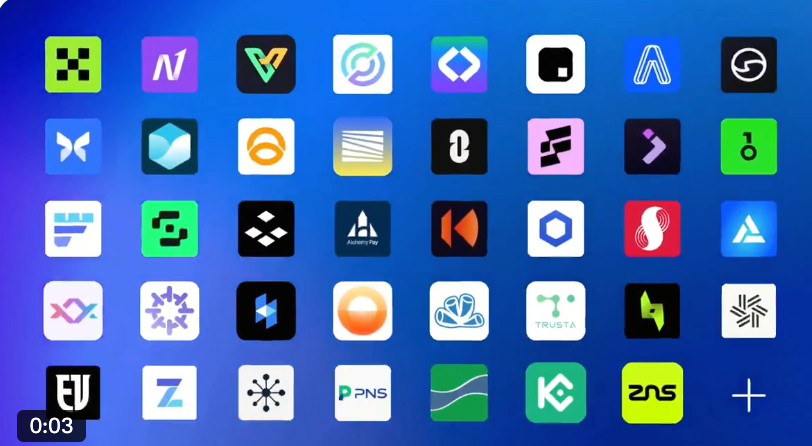
Pharos's ecosystem is centered on RWA, stablecoins, payment networks, and on-chain financial protocols. RWA protocols are its core focus; in the future, bonds, income certificates, and other real assets may be mapped and circulated on-chain via Pharos, creating liquidity and expanding the on-chain financial market.
Stablecoins and payment networks are also key directions. With its high-performance, low-latency architecture, Pharos is well positioned for payment scenarios—a major entry point for RWA liquidity. As cross-chain interoperability improves, Pharos can connect with a broader DeFi ecosystem, forming a complete financial network for asset issuance, trading, and settlement.
What Are the Limitations and Risks of Pharos?
Despite its clear positioning in RWA infrastructure and high-performance financial Layer1, Pharos faces uncertainties as an early-stage project.
Ecosystem adoption risk is a major challenge. RWA development depends not only on technology, but also on participation from asset issuers, institutional capital, and financial protocols. If ecosystem collaboration is slow, Pharos's technical advantages may not quickly convert to network value.
Market competition is also intense. Multiple projects are active in RWA infrastructure, including platforms focused on asset issuance and public chains emphasizing compliance. Additionally, RWA business involves regulatory and compliance risks—policy changes across regions may impact asset onboarding and institutional participation.
Pharos vs Plume: RWA Public Chain Comparison
Pharos and Plume both target RWA (real-world asset) on-chain infrastructure, but their development strategies are distinct.
| Comparison Dimension |
Pharos (PROS) |
Plume |
| Project Positioning |
High-performance Layer1 infrastructure for RWA and institutional finance |
Ecosystem network for RWA asset issuance and circulation |
| Core Advantages |
Parallel execution, modular design, high throughput |
RWA asset issuance support, strong ecosystem collaboration |
| Ecosystem Focus |
Financial infrastructure, payments, on-chain clearing |
Asset issuance, protocol integration, liquidity access |
| Target Users |
Institutional capital, financial protocols, RWA infrastructure developers |
Asset issuers, DeFi protocols, end users |
In summary, Pharos is focused on building a high-performance financial infrastructure foundation, while Plume emphasizes connectivity and circulation within the RWA asset ecosystem. Both drive RWA adoption from different angles—performance and ecosystem collaboration.
Summary
Pharos (PROS) is a high-performance Layer1 network dedicated to RWA and institutional-grade financial scenarios, aiming to deliver scalable, compliance-friendly, and efficient infrastructure for real financial assets on-chain. With parallel execution, modular design, and financial business optimization, Pharos is pioneering the next generation of RealFi blockchain networks.
As the RWA market grows, demands for robust foundational infrastructure increase. Pharos represents the evolution of public chain infrastructure toward financial specialization. If it continues to attract real assets and financial applications, Pharos could become a leading foundational network for RWA.
FAQs
How does Pharos differ from ordinary Layer1 networks?
Unlike ordinary Layer1 networks, Pharos is optimized for financial use cases—especially RWA asset issuance, institutional capital flows, and compliance support—making it better suited as a foundational network for real financial assets.
What are the uses of the PROS token?
PROS is mainly used for paying network fees, participating in governance, and ecosystem incentives. It is a key utility token supporting Pharos's operations and ecosystem growth.
What is Pharos's core development focus?
Pharos is focused on RWA, stablecoins, payment networks, and on-chain financial protocols, aiming to build a comprehensive ecosystem for on-chain real finance infrastructure.







