The development of decentralized finance has gradually transformed blockchain networks from simple asset transfer tools into on-chain financial infrastructure. Users no longer need only to move assets. They also need to borrow, lend, generate stablecoins, manage yields, and carry out more complex financial activities directly on-chain. As this trend has grown, major public blockchain ecosystems have begun building their own DeFi protocol stacks to meet demand for on-chain financial services.
As a high-throughput public blockchain with low transaction fees, TRON needs a complete decentralized finance protocol to support on-chain asset liquidity and stablecoin issuance. The JUST Foundation was created against this backdrop. It provides core financial functions such as lending, stablecoins, and governance for the TRON ecosystem, making it an important part of TRON’s DeFi infrastructure.
JUST’s Position and Importance in the DeFi Industry
In decentralized finance, stablecoin protocols and lending protocols are among the most essential pieces of infrastructure. Stablecoins provide a value-pegged asset, while lending protocols improve the efficiency of on-chain capital. JUST brings these two functions together within a single ecosystem, allowing users to collateralize digital assets, generate stablecoins, and then participate in lending markets.
This design means JUST is not just a standalone protocol, but a comprehensive DeFi platform on the TRON network. Its governance token, JST, is used not only for protocol governance, but also for incentives and fee payments. For the TRON ecosystem, JUST provides on-chain stablecoin and lending infrastructure. For users, it offers financial tools that do not require participation from centralized institutions. This gives JUST an important role within the TRON DeFi system.
What Is JUST (JST)?
JUST is a decentralized finance ecosystem deployed on the TRON network. It is mainly composed of a stablecoin protocol, a lending protocol, and a governance mechanism. Its goal is to provide open financial services, enabling users to collateralize assets, generate stablecoins, and borrow or lend on-chain through smart contracts.

JST is the native governance token of the JUST protocol. It is mainly used for protocol governance, parameter adjustments, fee payments, and community incentives. Through JST, token holders can participate in governance, including voting on collateral parameters, interest rate mechanisms, and feature upgrades.
In simple terms, JUST is the DeFi protocol system within the TRON ecosystem, while JST is the governance token that helps power and coordinate that system.
How Does the JUST DeFi Ecosystem Work?
JUST’s operating mechanism is built around the process of collateralizing assets, generating stablecoins, and participating in lending. It relies on several protocol modules working together.
Users first collateralize TRON ecosystem assets, such as TRX, through the stablecoin protocol, and then generate USDD, a stablecoin pegged to the U.S. dollar. This process is similar to overcollateralized lending. Users lock assets with a higher value in exchange for a circulating stablecoin.
The generated USDD can then be used in the JustLend lending market, either to lend out for yield or to borrow other assets. The entire process is executed through smart contracts, without the need for centralized institutions. JST plays a governance and incentive role throughout this process, helping ensure that protocol parameters can be adjusted by the community.
This modular design allows JUST to form a complete on-chain financial loop.
What Are the Core Products of JUST?
The JUST ecosystem consists of several protocol modules. Each module serves a different purpose, and together they form a complete DeFi service system.
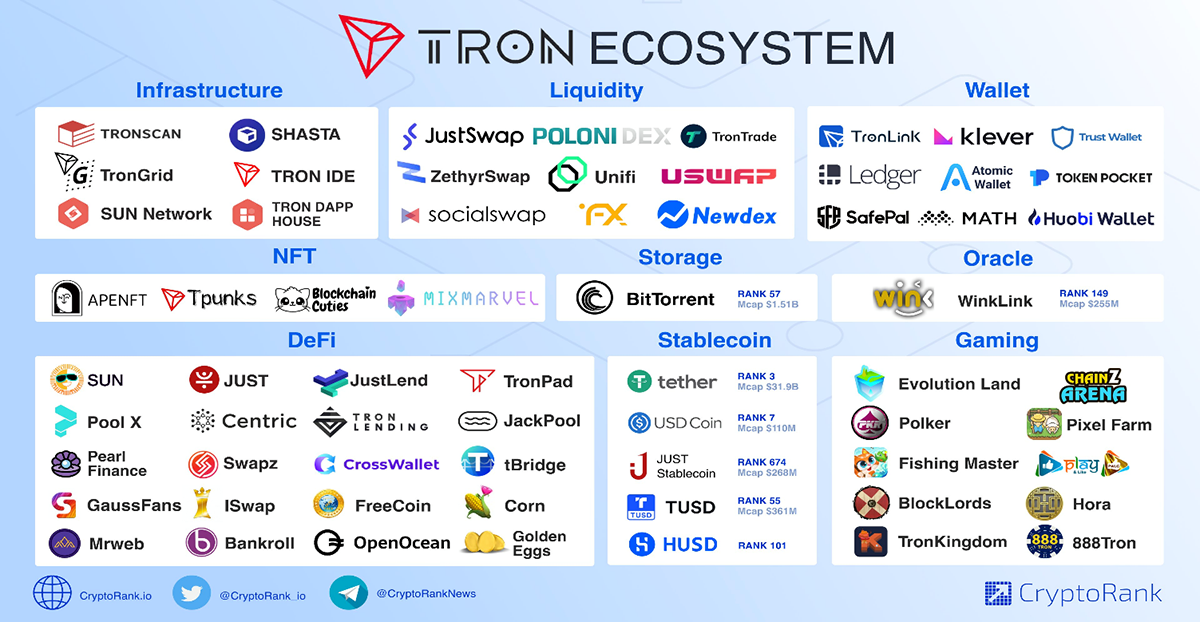
The first is JustStable, which allows users to generate the USDD stablecoin by collateralizing assets. This module gives the entire ecosystem its stablecoin issuance capability and is one of JUST’s core infrastructure components.
The second is JustLend, the lending market protocol within the JUST ecosystem. Users can deposit assets into the protocol to earn interest, or they can collateralize assets to borrow other digital assets, improving capital efficiency.
In addition, the JUST ecosystem works with TRON DeFi protocols such as SUN.io to provide liquidity support and yield tools, expanding the financial functions available across the broader ecosystem.
What Role Does the JST Token Play in the JUST Ecosystem?
JST is the governance token of the JUST protocol and an important part of its governance mechanism. Users who hold JST can take part in governance voting and help adjust protocol parameters, such as stablecoin fees, collateral ratios, and feature upgrade proposals.
Beyond governance, JST is also used to pay protocol-related fees. For example, fees generated during the stablecoin issuance process can be settled using JST, giving the token practical utility.
JST also serves as an ecosystem incentive token. Through reward mechanisms, it encourages users to participate in protocol governance and ecosystem activity. Governance, fees, and incentives together form the foundation of JST’s functional value.
How Is JUST Different from Other DeFi Protocols?
Compared with other DeFi protocols, JUST’s main distinguishing feature is its native positioning within the TRON ecosystem. For example, MakerDAO and Aave are built within the Ethereum ecosystem, while JUST provides stablecoin and lending infrastructure for the TRON network.
TRON’s relatively low fees and fast transaction confirmations give JUST advantages in operating cost and efficiency. This means users can reduce on-chain interaction costs when collateralizing assets, borrowing, lending, or generating stablecoins.
However, compared with more mature protocols on Ethereum, JUST depends more heavily on the growth of the TRON ecosystem. As a result, its ability to expand and its market influence are closely tied to the overall activity of the underlying network.
What Are the Advantages and Limitations of JUST?
JUST’s main advantage lies in its ability to provide low-cost on-chain financial services. With the support of the TRON network, users can complete collateralization, lending, borrowing, and stablecoin operations with relatively low fees, lowering the barrier to using DeFi.
In addition, JUST combines a stablecoin protocol with a lending protocol to create a complete financial loop, improving asset liquidity within the ecosystem.
At the same time, JUST has clear limitations. First, its ecosystem development is highly dependent on the TRON network. Second, compared with other major DeFi protocols, its market depth and protocol influence remain limited. Therefore, JUST’s long-term competitiveness depends on how far the TRON DeFi ecosystem can develop.
Conclusion
JUST is decentralized financial infrastructure within the TRON network. Through its stablecoin and lending protocols, it provides users with on-chain financial services. As the governance token, JST plays a central role in protocol governance, fee payments, and ecosystem incentives.
From an overall structural perspective, JUST builds the core modules for stablecoins and lending markets within the TRON ecosystem. It allows users to collateralize assets, generate stablecoins, and borrow or lend funds through smart contracts. Understanding how JUST works helps explain how DeFi protocols build on-chain financial infrastructure across different public blockchain ecosystems.
FAQs
What Is the Difference Between JST and USDD?
JST is a governance token used for protocol governance and fee payments. USDD is a stablecoin generated through collateralized assets and is used for value circulation.
What Are the Main Functions of JUST?
JUST provides stablecoin generation, on-chain lending, and asset management services. It is an important DeFi infrastructure layer in the TRON ecosystem.
Which Blockchain Is JUST Built On?
JUST is built on the TRON blockchain and is part of TRON’s native DeFi protocol ecosystem.
What Are the Main Uses of JST?
JST is mainly used for governance voting, paying protocol fees, and participating in ecosystem incentives.







