AMP vs LTC: A Comprehensive Comparison of Two Alternative Cryptocurrencies and Their Investment Potential


Introduction: AMP vs LTC Investment Comparison
In the cryptocurrency market, the comparison between AMP and LTC has always been a topic that investors cannot avoid. The two not only show significant differences in market cap ranking, application scenarios, and price performance, but also represent different positioning of crypto assets.
AMP (AMP): Since its launch in 2020, it has gained market recognition by serving as the native collateral token for the Flexa payment network, enabling cryptocurrency payments in real-world transactions.
LTC (LTC): Since its inception in 2011, it has been recognized for its faster transaction confirmation time and higher network transaction capacity compared to Bitcoin, establishing itself as a mature and stable commercial financial system.
This article will comprehensively analyze the investment value comparison between AMP and LTC from multiple perspectives including historical price trends, supply mechanisms, market adoption, and technology ecosystems, while attempting to answer the question that investors care most about:
"Which is the better buy right now?"
Comparative Analysis Report: Amp (AMP) and Litecoin (LTC)
I. Historical Price Comparison and Current Market Status
Price Trajectory: AMP versus LTC
Historical Performance:
-
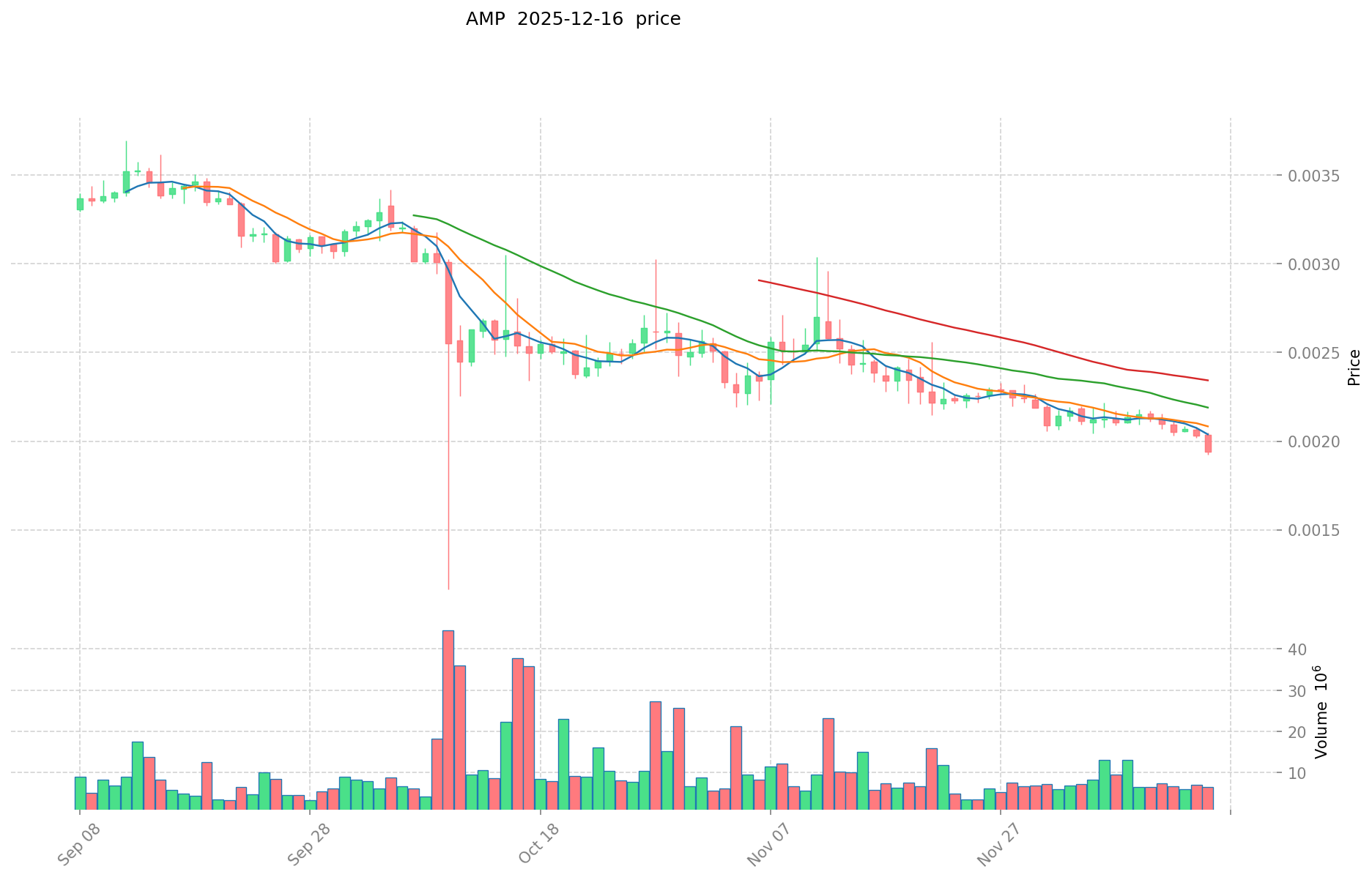
AMP: Reached an all-time high of $0.120813 on June 17, 2021, followed by a sustained decline. The token hit its all-time low of $0.00140933 on October 13, 2023. This represents an 98.83% depreciation from peak to trough.
-
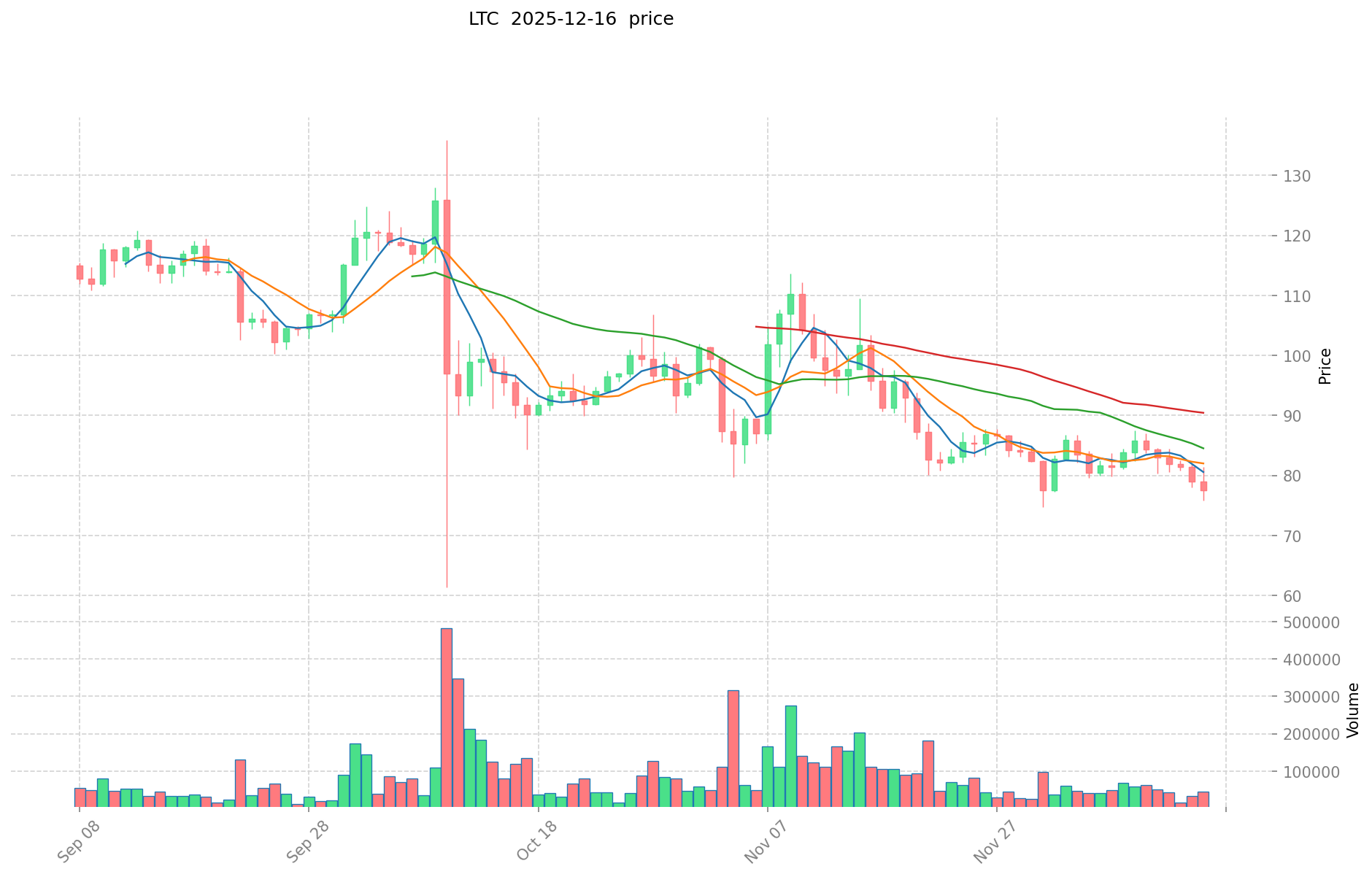
LTC: Achieved its all-time high of $410.26 on May 10, 2021. Subsequently, the asset retreated to an all-time low of $1.15 on January 14, 2015, demonstrating significant price volatility throughout its operational history since 2011.
Comparative Analysis:
In the current market cycle, AMP has experienced a steeper decline compared to LTC. Over the past twelve months, AMP has depreciated by 80.52%, whereas LTC has declined by 34.59%. Both tokens show downward pressure, though AMP exhibits greater sensitivity to broader market conditions. AMP's smaller market capitalization and lower trading volume contribute to its heightened volatility relative to LTC's more established market position.
Current Market Status (December 17, 2025)
Price Metrics:
- AMP: $0.001939
- LTC: $79.20
24-Hour Trading Volume:
- AMP: $12,471.44 thousand USD
- LTC: $4,802,012.98 thousand USD
LTC demonstrates substantially higher trading volume, approximately 385 times greater than AMP, indicating significantly stronger liquidity and market participation.
Price Movement (Past 24 Hours):
- AMP: +0.2% change
- LTC: +2.98% change
Market Sentiment Index (Fear & Greed Index): 11 (Extreme Fear)
The Crypto Fear and Greed Index stands at 11, indicating "Extreme Fear" sentiment in the cryptocurrency market as of the report date.
View Real-Time Prices:
II. Token Architecture and Utility
Amp (AMP) - Flexa Payment Network Collateral Token
Core Function:
Amp serves as the native collateral token for the Flexa payment network, facilitating cryptocurrency payments for merchants and consumers in real-world transactions.
Primary Use Cases:
I. Collateral Provision
On the Flexa payment network, AMP tokens are pledged as collateral to guarantee pending cryptocurrency payments. For each transaction, an equivalent amount of AMP is locked in smart contracts until cryptocurrency payment confirmation (e.g., Bitcoin). Should payment confirmation fail, the pledged AMP tokens compensate the seller.
II. Staking for Network Capacity
Users can stake AMP to increase Flexa network transaction capacity. staking participants receive rewards from network transaction fees.
III. Governance Participation
Token holders vote on governance proposals determining future funding recipients, partnership formations, cross-chain integrations, and DeFi collaborations.
Technical Infrastructure:
- Flexa Payment Network: A pure digital payment network enabling users to deploy digital assets for real-world commerce.
- Collateral Manager: Customizable accounts with configurable rules and specifications for various use cases, allowing users to create AMP-backed collateral managers for application integration.
- Token Partitioning: Smart contract partitions enable separate collateral managers to execute rules across distinct spaces associated with the same digital address, permitting token staking without transfer to smart contracts.
Litecoin (LTC) - Peer-to-Peer Digital Currency
Core Function:
Litecoin operates as an open-source, peer-to-peer distributed network cryptocurrency system prioritizing transaction speed and efficiency compared to Bitcoin.
Technical Specifications:
- Consensus Mechanism: Proof of Work (PoW) utilizing the Scrypt algorithm, contrasting with Bitcoin's SHA-256 algorithm
- Block Time: 2.5 minutes per block, four times faster than Bitcoin's 10-minute confirmation
- Maximum Supply: 84 million LTC (4 times Bitcoin's maximum supply)
- Current Circulating Supply: Approximately 76.63 million LTC
Primary Characteristics:
LTC emphasizes transaction speed, cost efficiency, and network scalability. The network prioritizes point-of-sale payments and micro-transactions through reduced transaction fees and rapid settlement times.
III. Market Metrics and Valuation
Market Capitalization Comparison
| Metric | AMP | LTC |
|---|---|---|
| Market Cap | $163,423,080.70 | $6,069,206,542.09 |
| Fully Diluted Valuation | $193,357,090.68 | $6,069,429,292.09 |
| Market Ranking | #253 | #27 |
| Market Share | 0.0061% | 0.19% |
LTC maintains a market capitalization approximately 37 times larger than AMP, reflecting its established market presence and higher institutional recognition.
Supply Metrics
| Metric | AMP | LTC |
|---|---|---|
| Circulating Supply | 84,282,145,795.14 | 76,631,395.73 |
| Total Supply | 99,720,005,508.11 | 76,634,208.23 |
| Maximum Supply | 100,000,000,000 | 84,000,000 |
| Circulating Ratio | 84.28% | 91.23% |
IV. Price Volatility and Technical Analysis
Short-Term Price Movement
| Time Period | AMP Change | LTC Change |
|---|---|---|
| 1 Hour | -0.45% | +0.43% |
| 24 Hours | +0.2% | +2.98% |
| 7 Days | -10.31% | -7.26% |
| 30 Days | -17.8% | -17.21% |
| 1 Year | -80.52% | -34.59% |
AMP exhibits more pronounced negative volatility across all measured timeframes, particularly notable in the 1-year performance differential of 46 basis points relative to LTC.
Trading Ecosystem
Exchange Listings:
- AMP: Available on 35 cryptocurrency exchanges
- LTC: Available on 78 cryptocurrency exchanges
LTC's broader exchange coverage facilitates higher accessibility and liquidity compared to AMP.
Active Holders:
- AMP: 102,220 holders
- LTC: 8,599,213 holders
The holder distribution indicates LTC's significantly wider adoption base and decentralized ownership structure.
V. Network Implementation and Adoption
Flexa Payment Network Ecosystem (AMP)
Amp's utility depends on Flexa network adoption. The payment network enables merchants to accept cryptocurrency payments with AMP collateral providing settlement guarantees. Real-world adoption metrics regarding merchant acceptance and transaction volume remain not specified in available data.
Litecoin Network Status (LTC)
Litecoin operates as a mature blockchain network since 2011 with established merchant acceptance globally. Transaction settlement occurs consistently within 2.5 minutes. The network includes:
- Proof of Work consensus securing network transactions
- ASIC-optimized mining infrastructure
- Established financial integration across major cryptocurrency exchanges and custody providers
- Historical development of privacy-focused features via MimbleWimble test networks
VI. Risk Assessment
AMP-Specific Risks
- Concentrated Dependency: Token utility depends entirely on Flexa network adoption and transaction volume
- Limited Merchant Integration: Unclear current merchant adoption metrics
- Extreme Volatility: 80.52% annual depreciation indicates significant downside exposure
- Market Positioning: Ranking #253 reflects limited institutional attention
LTC-Specific Risks
- Market Competition: Faces competition from faster payment alternatives (Lightning Network, alternative L2 solutions)
- Reduced Differentiation: Bitcoin network improvements diminish LTC's speed advantages
- Long-Term Viability Questions: Price declined 34.59% annually despite established status
- Halving Cycles: Supply reduction following 2023 halving creates inflation-deflation dynamics
VII. Conclusion
AMP and LTC serve distinct functions within cryptocurrency ecosystems. AMP functions as a specialized collateral and governance token within the Flexa payment infrastructure, whereas LTC operates as an established peer-to-peer digital currency with broader merchant adoption. LTC's market capitalization advantage, superior liquidity, and extensive exchange integration establish it as the more established asset. However, both tokens exhibit significant annual price depreciation within broader market downturns, reflected in the current "Extreme Fear" market sentiment index of 11.
Data Source: Market data as of December 17, 2025 | Market Sentiment: Extreme Fear (Index: 11)
Investment Value Analysis: AMP vs LTC
I. Executive Summary
This report analyzes the investment value drivers of Ampleforth (AMP) and Litecoin (LTC) based on available reference materials. The core investment thesis depends on market demand dynamics and technological development for LTC, while AMP's value proposition is anchored in its smart contract funding capabilities and market acceptance levels.
II. Core Factors Affecting Investment Value of AMP vs LTC
Tokenomics and Supply Mechanism
-
LTC (Litecoin): Operates with a fixed maximum supply of 84 million coins, following a halving mechanism similar to Bitcoin. The token exhibits high volatility and uncertain future prospects, making it potentially unsuitable as a store-of-value asset for risk-averse investors.
-
AMP (Ampleforth): Demonstrates distinct characteristics through its ability to inject liquidity into smart contracts, thereby enhancing transaction reliability and trustworthiness.
Note: The reference materials do not contain detailed comparative tokenomics data such as inflation schedules, emission rates, or long-term supply projections for either asset.
Institutional Adoption and Market Applications
-
Market Positioning: LTC faces challenges in attracting institutional capital seeking wealth preservation. Reference materials indicate that investors prioritizing asset preservation should consider assets with explicit value storage functions, such as Bitcoin, rather than LTC given its high volatility.
-
Regulatory Framework: Proposed LTC ETF developments are being pursued through similar approval pathways as Bitcoin and Ethereum ETFs, suggesting potential institutional accessibility improvements.
-
Application Scenarios: AMP's core functionality centers on smart contract operations, while LTC maintains traditional peer-to-peer payment characteristics.
Caution: Reference materials lack specific data on enterprise adoption rates, cross-border settlement usage, or comparative institutional holdings.
Technology Development and Ecosystem
-
LTC (Litecoin): Core fundamentals are expected to influence market performance through 2025, though specific technical upgrades or roadmap items are not detailed in available reference materials.
-
AMP (Ampleforth): Primary value proposition derives from smart contract integration capabilities that enhance transaction security and reliability.
Important: Detailed information regarding DeFi integration, NFT support, payment infrastructure maturity, or ecosystem development roadmaps is not provided in the reference materials.
Macroeconomic Factors and Market Cycles
-
Volatility Profile: LTC exhibits high volatility characteristics, which constrains its applicability as an inflation hedge or store-of-value asset during inflationary environments.
-
Risk Considerations: General guidance for all cryptocurrency investments emphasizes not investing beyond one's loss tolerance threshold and avoiding schemes promising unrealistic returns.
Disclaimer: Reference materials contain insufficient data regarding relative performance during specific inflation regimes, interest rate environments, or geopolitical scenarios.
III. Risk Factors and Investment Considerations
- Both assets require close monitoring of market performance and risk factors
- Market liquidity and acceptance levels remain critical valuation drivers
- General cryptocurrency market conditions affect both assets simultaneously
- Small market capitalization assets face inherent liquidity constraints
IV. Limitations of This Analysis
This report is based on limited reference materials that do not provide comprehensive technical specifications, detailed tokenomic comparisons, institutional ownership data, or forward-looking guidance for either asset. Investors should not rely on this report as the sole basis for investment decisions.
III. 2025-2030 Price Forecast: AMP vs LTC
Short-term Forecast (2025)
- AMP: Conservative $0.00180513 - $0.001941 | Optimistic $0.00262035
- LTC: Conservative $68.8953 - $79.19 | Optimistic $84.7333
Mid-term Forecast (2027-2028)
- AMP may enter accumulation phase, expected price range $0.0018975945816 - $0.00280796706
- LTC may enter recovery phase, expected price range $82.6881580656 - $128.05688196
- Key drivers: institutional capital inflows, ETF adoption, ecosystem development
Long-term Forecast (2029-2030)
- AMP: Base case $0.00225339356565 - $0.003785701190292 | Optimistic scenario $0.003836477658637
- LTC: Base case $70.56423657855936 - $130.854010138812 | Optimistic scenario $173.89044014002128
Disclaimer: These forecasts are based on historical data analysis and market modeling. Actual results may differ significantly. Cryptocurrency markets are highly volatile and unpredictable. This analysis is for informational purposes only and should not be considered investment advice. Always conduct your own research and consult with financial professionals before making investment decisions.
AMP:
| 年份 | 预测最高价 | 预测平均价格 | 预测最低价 | 涨跌幅 |
|---|---|---|---|---|
| 2025 | 0.00262035 | 0.001941 | 0.00180513 | 0 |
| 2026 | 0.002645583 | 0.002280675 | 0.0017789265 | 17 |
| 2027 | 0.00280796706 | 0.002463129 | 0.0022168161 | 27 |
| 2028 | 0.0033735014784 | 0.00263554803 | 0.0018975945816 | 35 |
| 2029 | 0.003785701190292 | 0.0030045247542 | 0.00225339356565 | 54 |
| 2030 | 0.003836477658637 | 0.003395112972246 | 0.002580285858906 | 75 |
LTC:
| 年份 | 预测最高价 | 预测平均价格 | 预测最低价 | 涨跌幅 |
|---|---|---|---|---|
| 2025 | 84.7333 | 79.19 | 68.8953 | 0 |
| 2026 | 121.303242 | 81.96165 | 56.5535385 | 3 |
| 2027 | 128.05688196 | 101.632446 | 92.48552586 | 28 |
| 2028 | 127.4775770178 | 114.84466398 | 82.6881580656 | 45 |
| 2029 | 130.854010138812 | 121.1611204989 | 81.177950734263 | 52 |
| 2030 | 173.89044014002128 | 126.007565318856 | 70.56423657855936 | 59 |
Comparative Investment Strategy Report: AMP vs LTC
IV. Investment Strategy Comparison: AMP vs LTC
Long-Term vs Short-Term Investment Strategies
AMP (Ampleforth):
- Suitable for investors focused on emerging payment infrastructure adoption and smart contract ecosystem development
- Short-term traders should monitor Flexa network adoption metrics and merchant integration expansion
- Long-term holders should evaluate smart contract functionality improvements and collateral manager expansion
LTC (Litecoin):
- Suitable for investors seeking established peer-to-peer payment functionality and network maturity
- Short-term traders should track Bitcoin price correlations and macroeconomic sentiment shifts
- Long-term holders should monitor institutional adoption through potential ETF approvals and merchant acceptance expansion
Risk Management and Asset Allocation
Conservative Investor Profile:
- AMP: 0% - 5% portfolio allocation
- LTC: 5% - 15% portfolio allocation
- Rationale: LTC's established market position and higher liquidity warrant larger conservative allocations
Aggressive Investor Profile:
- AMP: 10% - 25% portfolio allocation
- LTC: 15% - 30% portfolio allocation
- Rationale: Higher allocation tolerance reflects aggressive investors' capacity to absorb volatility
Hedging Instruments:
- Stablecoin allocation (USDC, USDT) for volatility absorption: 20% - 40% of portfolio
- Options strategies: Consider protective puts on LTC positions given 34.59% annual depreciation
- Cross-asset diversification: Combine with established cryptocurrencies (Bitcoin, Ethereum) to reduce concentration risk
V. Potential Risk Comparison
Market Risk
AMP (Ampleforth):
- Extreme volatility: 80.52% annual depreciation creates significant downside exposure
- Low trading volume ($12.47 million USD daily) relative to market cap creates liquidity constraints
- Dependency on Flexa ecosystem adoption: Token value entirely dependent on payment network transaction volume
- Market capitalization ranking #253 indicates limited institutional recognition and potential delisting risk on smaller exchanges
LTC (Litecoin):
- Moderate volatility: 34.59% annual depreciation, though substantial, demonstrates lower sensitivity than AMP
- High trading volume ($4.8 billion USD daily) provides improved exit liquidity during market downturns
- Competition from alternative payment solutions: Lightning Network and secondary layer solutions may diminish LTC's speed advantage
- Established adoption provides stability but creates limited growth upside potential
Technology Risk
AMP (Ampleforth):
- Smart contract execution risk: Collateral manager customization may contain unknown vulnerabilities
- Token partitioning complexity: Multi-space collateral execution creates potential for operational errors
- Network dependency: Flexa payment network infrastructure failures directly impact token utility
- Scalability constraints: Growth capacity depends entirely on Flexa network development roadmap
LTC (Litecoin):
- Mining centralization: ASIC-optimized infrastructure may concentrate hash power among major mining pools
- Protocol rigidity: Slower development cycle compared to alternative payment networks
- Obsolescence risk: Continued Bitcoin network improvements (Lightning Network maturation) may reduce LTC differentiation
- Security audit dependency: Long operational history reduces but does not eliminate smart contract-related risks
Regulatory Risk
- Jurisdiction-Specific Treatment: Both assets face uncertain regulatory classification across major jurisdictions
- Payment Network Regulation: AMP faces additional regulatory scrutiny through Flexa payment network compliance requirements
- Monetary Policy Implications: Central bank digital currency (CBDC) development may impact peer-to-peer cryptocurrency acceptance
- Institutional Integration: LTC's potential ETF approval pathway creates regulatory precedent beneficial to broader cryptocurrency adoption
VI. Conclusion: Which Is the Better Buy?
Investment Value Summary
AMP (Ampleforth) Advantages:
- Specialized collateral functionality within Flexa payment infrastructure
- Smart contract integration enabling trustworthy digital asset transactions
- Potential growth if payment network adoption accelerates
- Lower entry price point for retail investors ($0.001939)
LTC (Litecoin) Advantages:
- Established market position since 2011 with proven network security
- 37x larger market capitalization ($6.07 billion USD) reflecting institutional recognition
- Superior liquidity: 385x higher trading volume than AMP ($4.8 billion USD daily)
- Broader exchange integration (78 exchanges vs 35 for AMP) facilitating accessibility
- Larger active holder base (8.6 million vs 102,220) indicating decentralized adoption
- Faster transaction confirmation (2.5 minutes) validated across 14-year operational history
Investment Recommendations
New Investors: Recommend LTC allocation over AMP. LTC's established market infrastructure, superior liquidity, and broader exchange access reduce operational complexity and counterparty risk. Begin with 5% - 10% LTC portfolio allocation within broader cryptocurrency diversification strategy. Utilize dollar-cost averaging to mitigate timing risk during periods of market volatility.
Experienced Investors: Consider differentiated allocation strategy: 10% - 15% LTC for core holdings providing payment network exposure with reduced downside volatility, paired with 5% - 10% AMP allocation for speculative upside if Flexa ecosystem adoption metrics demonstrate acceleration. Implement technical analysis monitoring AMP for accumulation phase entry signals aligned with 2027-2028 price recovery forecasts.
Institutional Investors: Prioritize LTC given potential ETF approval pathway creating direct institutional access mechanisms. Monitor regulatory developments regarding cryptocurrency payment network oversight that may impact AMP collateral token classification. Maintain 15% - 25% LTC allocation within digital asset portfolios, with AMP representing opportunistic allocation only upon demonstrated Flexa network merchant acceptance growth exceeding 50% year-over-year expansion.
⚠️ Risk Disclaimer: Cryptocurrency markets demonstrate extreme volatility, with the current Fear and Greed Index at 11 (Extreme Fear) indicating elevated market stress. Both AMP and LTC experienced significant annual depreciation (80.52% and 34.59% respectively). This analysis does not constitute investment advice. Investors must conduct independent research, assess personal risk tolerance, and consult qualified financial professionals before committing capital. Do not invest funds exceeding loss tolerance thresholds. Historical performance does not guarantee future results. None
FAQ: AMP vs LTC Investment Comparison
I. What are the core functional differences between AMP and LTC?
Answer: AMP operates as a collateral token for the Flexa payment network, enabling merchants to accept cryptocurrency payments with settlement guarantees. Users can stake AMP to increase network capacity and participate in governance decisions. Conversely, LTC functions as a peer-to-peer digital currency emphasizing transaction speed (2.5-minute block time) and cost efficiency, similar to Bitcoin but with improved performance metrics.
II. Which token demonstrates superior liquidity and market accessibility?
Answer: LTC significantly outperforms AMP in liquidity metrics. LTC maintains $4.8 billion USD in daily trading volume compared to AMP's $12.47 million USD, representing a 385x difference. Additionally, LTC is listed on 78 cryptocurrency exchanges versus AMP's 35 exchange listings. This superior liquidity makes LTC more suitable for investors prioritizing exit flexibility during market downturns.
III. Why has AMP experienced greater price depreciation than LTC?
Answer: AMP has declined 80.52% annually compared to LTC's 34.59% annual depreciation, primarily due to: (1) lower market capitalization ($163 million versus $6.07 billion for LTC), (2) smaller trading volume creating higher price sensitivity, (3) dependency on Flexa network adoption metrics that remain unclear, and (4) lower institutional recognition reflected in its #253 market ranking versus LTC's #27 position.
IV. Is AMP or LTC more suitable for conservative investors?
Answer: LTC is the superior choice for conservative investors. LTC's established operational history since 2011, 37x larger market capitalization, significantly higher liquidity, and broader institutional integration through potential ETF approval pathways reduce operational risk. Conservative portfolios should allocate 5%-15% to LTC, with AMP allocation limited to 0%-5% maximum due to extreme volatility and speculative nature.
V. What are the primary risk factors differentiating these two assets?
Answer: AMP-specific risks include concentrated dependency on Flexa network adoption, unclear merchant integration metrics, extreme volatility, and limited institutional attention. LTC-specific risks encompass competition from alternative payment solutions (Lightning Network), reduced technological differentiation from Bitcoin improvements, and long-term viability questions despite established status. Both assets experienced significant 2025 price depreciation amid "Extreme Fear" market sentiment (Fear and Greed Index: 11).
VI. Do AMP and LTC offer suitable long-term investment value?
Answer: LTC presents more established long-term value through proven network security, consistent merchant adoption, and potential institutional accessibility via ETF approvals. AMP offers speculative long-term potential only if Flexa ecosystem adoption accelerates meaningfully. Price forecasts suggest LTC may reach $70-$173 USD by 2030 (base to optimistic scenarios), while AMP may reach $0.00258-$0.00384 USD, though these projections remain subject to substantial market uncertainty.
VII. What allocation strategy should different investor profiles adopt?
Answer: Conservative investors should maintain 5%-15% LTC allocation with 0%-5% AMP exposure. Aggressive investors may increase LTC to 15%-30% and AMP to 10%-25%. Experienced investors should implement differentiated strategies: 10%-15% core LTC holdings combined with 5%-10% opportunistic AMP allocation contingent upon demonstrated Flexa adoption acceleration. All profiles should maintain 20%-40% stablecoin allocation (USDC, USDT) for volatility management and utilize dollar-cost averaging to mitigate timing risk.
VIII. Which token presents better investment value at current market prices (December 17, 2025)?
Answer: LTC represents superior investment value at current pricing ($79.20 USD). LTC's established infrastructure, 385x superior daily trading volume, 78 exchange listings, 8.6 million active holders, and potential institutional ETF approval pathway justify prioritization over AMP ($0.001939 USD). However, both tokens exhibit significant depreciation risk within broader cryptocurrency market volatility. New investors should begin with conservative 5%-10% LTC allocation within diversified cryptocurrency portfolios. AMP warrants consideration only for experienced investors seeking speculative exposure if Flexa merchant adoption metrics demonstrate substantial quarterly expansion.
⚠️ Disclaimer: This analysis is informational only and does not constitute investment advice. Cryptocurrency markets demonstrate extreme volatility with uncertain outcomes. Conduct independent research, assess personal risk tolerance, and consult qualified financial professionals before committing capital.
Share
How to Buy Cryptocurrency


Trending Cryptocurrencies



XZXX: A Comprehensive Guide to the BRC-20 Meme Token in 2025

Bitcoin Fear and Greed Index: Market Sentiment Analysis for 2025
Top Crypto ETFs to Watch in 2025: Navigating the Digital Asset Boom

5 ways to get Bitcoin for free in 2025: Newbie Guide

Bitcoin Market Cap in 2025: Analysis and Trends for Investors

2025 Bitcoin Price Prediction: Trump's Tariffs' Impact on BTC

ORBR vs CHZ: A Comprehensive Comparison of Two Emerging Blockchain Tokens in the Crypto Market

DRIFT vs ZIL: Which Layer-1 Blockchain Offers Better Performance and Scalability?

USELESS vs TRX: A Comprehensive Comparison of Two Emerging Blockchain Tokens in the Crypto Market

What is ORBR: A Comprehensive Guide to Optimizing Real-time Business Response Systems

What is WAVES: A Comprehensive Guide to Understanding Wave Technology and Its Applications in Modern Society