





Luna_Star

vip
Age 1.2 Yıl
Peak Tier 5
No content yet
Falcon_Officialvip
#SECApprovesNasdaqTokenizedSecuritiesTrading
In a major development for the intersection of traditional finance and blockchain technology, the U.S. Securities and Exchange Commission (SEC) has officially approved a rule change that allows the Nasdaq Stock Exchange to support trading and settlement of tokenized securities. This decision marks a watershed moment in market structure, signaling that blockchain‑based assets are moving from experimental niches into the center of regulated capital markets. With this approval, Nasdaq becomes one of the first major U.S. exchanges to gain formal regulatory green light to integrate digital tokens representing real equities and exchange‑traded funds (ETFs) into its core trading ecosystem.
The approval reflects years of regulatory, technological, and market evolution from early blockchain experiments to comprehensive pilot frameworks that attempt to bring regulated digital assets onto established financial infrastructure. At its core, this change does not simply enable trading on a new platform: it bridges blockchain technology with the long‑standing principles of investor protection, market integrity, and national market systems.
What “Tokenized Securities” Actually Means
Tokenized securities are digital representations of traditional financial instruments such as stocks, ETFs, and other registered securities that are recorded as cryptographic tokens on a blockchain.
These tokens represent the same ownership rights, governance rights (including voting and dividend entitlements), and economic value as their traditional counterparts but with the added flexibility that blockchain infrastructure offers, including potential for faster settlement and programmatic functionality.
Under the new approval, Nasdaq will operate a pilot program where eligible securities can be traded in two parallel forms:
Traditional book‑entry form the familiar system used in today’s markets.
Tokenized blockchain‑based form digital tokens that represent each share or unit.
Both forms will exist within the same consolidated order book with the same pricing, execution priority, and regulatory oversight, ensuring a consistent trading experience whether investors use tokenized or traditional shares.
This maintains the uniform market structure that U.S. regulators have long championed, while still allowing innovative settlement technology to operate.
Which Securities Are Included in the Pilot
The approval initially applies to a carefully selected group of high‑volume securities that are most suitable for tokenization. These include:
Shares from the Russell 1000 Index a benchmark index representing the largest 1,000 U.S. companies by market capitalization.
Exchange‑Traded Funds (ETFs) that track major benchmarks such as the S&P 500 and Nasdaq‑100.
Unlike less liquid or niche instruments, these securities are widely traded and familiar to institutional and retail investors alike, making them ideal for piloting tokenized trading on a regulated exchange.
How the Tokenized Trading System Works
Although tokenized securities are digital tokens on a blockchain, the core trading and settlement infrastructure remains deeply integrated with traditional market systems:
Same Order Book and Matching Engine
Tokenized securities will trade within the same Nasdaq order book as traditional shares. This ensures:
No fragmentation of liquidity tokenized and traditional shares contribute to the same market depth.
Identical execution priority a tokenized order and a normal share order do not differ in how they are matched and executed.
Same market pricing the price at which tokenized and traditional shares trade will align, preventing price discrepancies between different forms of the same security.
Settlement Through Existing Infrastructure
Instead of creating a completely new blockchain settlement layer, the system will continue to use the Depository Trust Company (DTC), the primary clearing and settlement infrastructure for U.S. equities. This helps preserve existing legal frameworks and ensures that regulated controls remain in place even as blockchain tokens move through the system.
Traders who want to use tokenized settlement can specify this at order entry, and the exchange transmits that preference to DTC for processing. If for any reason tokenized settlement is not feasible for a particular trade (e.g., regulatory or technical constraints), the transaction simply settles in traditional form.
Why This Approval Matters
This approval is a landmark regulatory milestone for several reasons:
1. Mainstream Integration of Blockchain Technology
For the first time, a major U.S. exchange will integrate blockchain‑based versions of real securities within its regulated market, rather than relying on separate or experimental venues. Institutional markets are now fully experimenting with on‑chain features while still respecting investor protection frameworks.
2. Preservation of Existing Protections
Rather than weakening regulatory oversight, the system places tokenized trading within the existing national market system. Tokenized securities must:
Share the same ticker and CUSIP as traditional shares,
Offer the same rights (such as dividends and voting),
Abide by the same surveillance and compliance requirements.
This ensures tokenized instruments are not second‑class alternatives, but direct equivalents of regulated securities.
3. A Step Toward Faster and More Transparent Markets
While traditional stock settlement often takes one to two business days (T+1 or T+2), blockchain tokens have the potential for much faster settlement, reducing counterparty risk and processing latency. The pilot also lays the groundwork for potential future innovations in settlement efficiency, programmable corporate actions, and market access.
Potential Benefits for Investors and Markets
This approval carries several key advantages for both retail and institutional market participants:
Enhanced Market Accessibility
Tokenized assets could pave the way for more flexible trading models, such as extended trading hours or even near‑24/7 access, especially as infrastructure matures.
Fractional Ownership Opportunities
Tokenization naturally enables fractional ownership, allowing investors to hold smaller fractions of expensive shares. While brokers already offer similar products, blockchain natives this feature at the asset level itself. This can democratize access to high‑value securities for smaller investors.
Innovative Market Functions
Tokenized securities could support programmable corporate actions such as automated dividend distribution, proxy voting, and smart contract‑based governance offering a richer layer of functionality over traditional securities settlement.
Looking Ahead What Comes Next
The SEC’s approval is just the beginning of a broader transformation. Markets will monitor the pilot results closely, and regulators will likely continue adapting rules as tokenization practices evolve. Although the initial rollout will use traditional settlement infrastructure via DTC, future developments may explore even more blockchain‑native capabilities.
Moreover, other large exchanges are also exploring similar paths. This suggests that tokenization is quickly becoming a mainstream market trend, not a niche experiment.
In essence, the SEC’s approval empowers Nasdaq to begin the earliest stages of bridging traditional equities markets with blockchain technology a long‑anticipated and highly significant development in global finance.
Conclusion:
A Milestone in TradFi and Web3 Integration
The SEC’s approval for tokenized securities trading at Nasdaq represents a major convergence between traditional finance and Web3 innovation. By integrating digital tokens representing shares and ETFs into a regulated market environment, the decision paves the way for a future where blockchain technology and regulated capital markets coexist harmoniously.
This landmark change is more than just a pilot program it’s a symbolic indicator of financial innovation evolving within regulatory guardrails, offering new opportunities in settlement efficiency, market accessibility, and investor empowerment. As markets prepare for broader adoption of tokenized assets, this approval positions Nasdaq at the forefront of this historic shift.
Summary of Key Points
SEC approved Nasdaq’s proposal to trade and settle tokenized form of traditional securities.
Eligible securities include stocks in the Russell 1000 Index and major ETFs.
Tokenized shares will have the same price, rights, and execution priority as traditional shares on the same order book.
Settlement will continue through the Depository Trust Company, ensuring regulatory alignment.
repost-content-media
  • Reward
  • 2
  • Repost
  • Share
discoveryvip:
To The Moon 🌕
View More
Falcon_Officialvip
#SECAndCFTCNewGuidelines
In March 2026, two of the most powerful financial regulators in the United States the Securities and Exchange Commission (SEC) and the Commodity Futures Trading Commission (CFTC) took a historic step by issuing new joint guidance aimed at clarifying how federal financial laws apply to digital assets, including cryptocurrencies, tokenized products, and innovative blockchain technologies. This interpretive guidance marks a significant departure from years of uncertainty, overlapping enforcement actions, and conflicting interpretations of existing regulations. The new framework is widely seen as the most comprehensive attempt yet to create regulatory clarity for digital asset markets in the U.S., signaling a shift from the previous era of enforcement‑driven oversight to a more structured approach that seeks to balance investor protection, market integrity, and technological innovation. The core purpose of these guidelines is to define more precisely which digital assets fall under securities laws and which fall under commodity laws, and to establish a taxonomy of digital asset categories that helps firms understand their regulatory responsibilities.
At the heart of this guidance is the recognition that the traditional classification of “securities” under U.S. law has been difficult to apply directly to digital assets because many cryptocurrencies and blockchain‑based tokens do not fit neatly into the existing legal definitions that were largely developed decades before the advent of decentralized networks and smart contracts. Under the new guidance, the SEC and CFTC agreed to classify digital assets into several distinct categories, each with its own regulatory treatment. This new taxonomy includes categories such as digital commodities, digital collectibles, digital tools, stablecoins, and digital securities. Only the last category, “digital securities,” remains subject to federal securities laws, meaning many popular digital assets that were previously ambiguous may now fall outside of securities regulation and instead fall under the Commodity Futures Trading Commission’s oversight or remain outside of both securities and commodities laws.
One of the most important aspects of the guidance is the clarification that most major cryptocurrencies are not considered securities by default. Traditional securities laws, under the longstanding “Howey Test,” consider whether an investment involves an expectation of profit derived from the efforts of others. The new interpretation recognizes that many digital assets, including prominent tokens like Bitcoin and Ethereum, derive their value from decentralized network activity, supply and demand dynamics, and programmatic protocols rather than centralized managerial efforts. As a result, assets that meet these criteria are now explicitly categorized as digital commodities, which historically fall under CFTC jurisdiction, not the SEC’s. This is a major regulatory shift from previous interpretations that tended to view many digital coins as unregistered securities.
Under the newly established categories, digital assets are grouped based on their characteristics and how they are created, distributed, used, and traded. Digital commodities are those that function autonomously, where the protocol’s network effects and economic design largely determine value. Digital collectibles refer to non‑fungible tokens (NFTs) and other unique digital items that typically do not represent financial investments. Digital tools are utility tokens that serve specific protocol functions but do not carry profit expectations. Stablecoins are tokens pegged to stable assets like fiat currencies and designed for payments and settlements. Finally, digital securities include tokenized stocks, bonds, and other investment instruments whose economic characteristics align with traditional financial securities. This clear segmentation is intended to reduce regulatory ambiguity that market participants have long complained about.
The SEC and CFTC joint guidance also addresses specific activities in the digital asset space, such as staking, mining, airdrops, and decentralized finance (DeFi) operations. The guidance suggests that routine blockchain activities like mining and native protocol staking are not inherently securities transactions, which was previously a gray area for many firms and investors. However, if these activities are packaged with profit‑sharing arrangements or other centralized managerial efforts, they could still trigger securities regulations. This focus on economic function rather than form is intended to create a more objective and practical methodology for determining regulatory obligations.
Alongside this interpretive guidance, the agencies have indicated that further formal rulemaking is expected. The chairman of the SEC has publicly stated that the guidance will likely be followed soon by formal proposed rules to codify the new interpretations into enforceable regulations. These rules may include “safe harbor” provisions designed to give projects, especially startups and early‑stage companies, temporary relief or a clear compliance path as they develop products and services, while still protecting investors from fraud and abuse. The expectation is that these forthcoming rules will offer even more certainty and stability, reducing the reliance on enforcement actions as the primary mode of regulatory explanation.
Industry reactions to these new guidelines have been mixed but largely positive. Many firms and institutional participants in digital markets have welcomed the clarity, arguing that it reduces legal risk and creates a foundation for growth, innovation, and mainstream participation. Some proponents argue that clear regulatory boundaries will encourage institutional capital inflows, promote competitive U.S. markets for tokenized assets, and strengthen the ability of regulated platforms to offer spot and derivative crypto products. However, market reactions have also been cautious, with some digital asset prices reacting modestly or even declining as investors await the actual rulemaking that will give the guidance the force of law. The sentiment reflects an understanding that interpretive guidance only provides a framework and that actual legislation or formal regulation is still needed for full market confidence.
Critics of the guidance note that it is not a law passed by Congress and therefore could be subject to legal challenge, reinterpretation, or reversal depending on changes in administration or judicial review. They further argue that while the framework is a significant improvement, it does not replace the need for comprehensive federal legislation that would codify digital asset definitions, jurisdictional authorities, and consumer protections under a single statute. Indeed, legislative efforts such as proposed acts in Congress have aimed to define terms like digital commodity and establish clearer mandates for regulators, but these efforts have been slow to progress. In the absence of new laws, the SEC and CFTC guidance functions as a working regulatory roadmap but not a legislative mandate.
Overall, the SEC and CFTC’s new guidance represents one of the most consequential regulatory developments for digital assets in the United States in 2026. By classifying assets into discrete categories, clarifying enforcement priorities, and articulating a cooperative regulatory strategy, the agencies have taken a decisive step toward reducing the long‑standing uncertainties that have hindered innovation and business planning. The new framework reflects an effort to strike a balance between protecting investors and fostering responsible growth, acknowledging the unique economic attributes of digital assets while upholding the core principles of U.S. financial regulation. Moving forward, market participants, legal experts, and policymakers will be watching as formal rules and potential legislation build on this guidance, shaping the long‑term landscape of digital finance in the United States.
repost-content-media
  • Reward
  • 2
  • Repost
  • Share
discoveryvip:
To The Moon 🌕
View More
#USIranWarUpdates
From a financial markets perspective, heightened geopolitical risk typically drives flight-to-safety behavior. U.S. Treasuries and gold have seen inflows, while risk-sensitive assets—such as equities and cryptocurrencies—experience increased volatility. Traders in crypto markets often respond to such news with rapid position adjustments: some reduce exposure to risk-on assets like Bitcoin and Ethereum, while others seek opportunities in market dislocations.
Platforms like Gate.io and AI-driven assistants such as Gate Blue Lobster are essential in such scenarios. Blue Lobster
BTC0,43%
ETH0,15%
DEFI3,47%
post-image
  • Reward
  • 4
  • Repost
  • Share
discoveryvip:
To The Moon 🌕
View More
#USFebPPIBeatsExpectations
The latest trend highlights a significant macro development: U.S. producer prices rose more than economists expected in February—both on a monthly and annual basis—signaling that inflation pressures at the wholesale level remain stubbornly strong. This surge was larger than market forecasts and represents the biggest increase in several months for wholesale prices, pushing the annual Producer Price Index (PPI) higher than anticipated.
PPI measures the average changes in prices received by domestic producers for their output, making it a leading inflation indicator.
BTC0,43%
DEFI3,47%
post-image
  • Reward
  • 4
  • Repost
  • Share
discoveryvip:
To The Moon 🌕
View More
#FedHoldsRatesSteady
The Federal Reserve has just held interest rates steady, creating a unique window for traders and investors across both traditional and crypto markets. While many see a pause as uneventful, anyone using AI-powered tools can turn this “stable” moment into a strategic edge.
From a macro perspective, the Fed’s decision signals caution. Inflation pressures remain, but economic activity—consumer spending, labor markets, and industrial production—shows resilience. By holding rates steady, the Fed gives markets time to digest prior adjustments and avoid shocks. This stability im
BTC0,43%
ETH0,15%
post-image
  • Reward
  • 4
  • Repost
  • Share
discoveryvip:
To The Moon 🌕
View More
#AnimocaBrandsInvestsInAVAX
The announcement marks a significant milestone in the expansion of blockchain-based gaming and Web3 ecosystems. Animoca Brands, known for its investments in digital property and NFT gaming platforms, has strategically allocated capital into Avalanche, signaling confidence in its scalable, high-performance blockchain infrastructure.
This investment is not just financial—it’s strategic. Avalanche offers fast transaction speeds, low fees, and robust smart contract capabilities, making it ideal for gaming and NFT applications. Animoca Brands’ support could accelerate a
AVAX0,28%
post-image
  • Reward
  • 5
  • Repost
  • Share
discoveryvip:
2026 GOGOGO 👊
View More
#JPMorganCutsSP500Outlook
The news that signals growing caution among major institutional investors regarding U.S. equities. According to JPMorgan, macroeconomic headwinds, rising interest rates, and geopolitical uncertainties are forcing a downward revision of their S&P 500 forecasts, highlighting increased market risk for both retail and professional investors.
From a broader perspective, this adjustment is more than just numbers—it reflects sentiment shifts that can influence trading behavior. When a major bank like JPMorgan revises its outlook, it often triggers portfolio reallocations, h
BTC0,43%
ETH0,15%
post-image
  • Reward
  • 4
  • Repost
  • Share
discoveryvip:
LFG 🔥
View More
#GateSquareAIReviewer
#Gate广场AI测评官
When I first heard about AI trading tools on Gate.io, I honestly thought it was just another hype feature—something that looks impressive but doesn’t really change results. But after actually testing it in real market conditions, my perspective completely changed. This is not just a tool… it’s a shift in how trading decisions are made.
Before using AI, my strategy was simple but flawed: follow trends, react to news, and rely on indicators I barely understood. Sometimes I would catch a good move, but most of the time I entered too late or exited too early. Th
BLUE0,46%
post-image
  • Reward
  • 5
  • Repost
  • Share
discoveryvip:
LFG 🔥
View More
#KalshiRaisesOver1B
The milestone marks a major breakthrough in the evolution of prediction markets and signals growing institutional confidence in data-driven financial ecosystems. With Kalshi surpassing the $1 billion funding mark and reaching a multi-billion-dollar valuation, it is clear that markets based on forecasting real-world events are no longer niche—they are becoming a core part of modern finance.
Prediction markets allow users to trade on the outcomes of real-world events, from economic indicators to political decisions. Unlike traditional trading, which focuses on asset price mo
BLUE0,46%
post-image
  • Reward
  • 4
  • Repost
  • Share
discoveryvip:
LFG 🔥
View More
#BitcoinSupportAndResistanceAnalysis
Understanding is one of the most essential skills for navigating the crypto market, especially when dealing with volatile assets like Bitcoin. These levels are not just lines on a chart—they represent real zones of buying and selling pressure, where market psychology, liquidity, and trader behavior all come together.
Support is the level where demand becomes strong enough to stop price from falling further. It forms when buyers consistently step in at a specific range, creating a floor for the market. When Bitcoin approaches support, experienced traders lo
BTC0,43%
post-image
  • Reward
  • 4
  • Repost
  • Share
discoveryvip:
2026 GOGOGO 👊
View More
#OpenAIPlansDesktopSuperApp
The trend highlights a major strategic shift by OpenAI, signaling the transition from multiple fragmented tools into a unified, all-in-one AI ecosystem. According to recent reports, OpenAI is working on a desktop “superapp” that will combine its core products—ChatGPT, the OpenAI Codex, and an AI-powered browser—into a single seamless experience.
This move is not just about convenience—it’s about redefining how users interact with AI. Instead of switching between different apps for chatting, coding, browsing, and analysis, everything will exist in one intelligent in
post-image
  • Reward
  • 2
  • Repost
  • Share
discoveryvip:
LFG 🔥
View More
#CreatorLeaderboard
#Gate广场 #创作者冲榜 #内容挖矿
The launch of the Gate Square Creator Leaderboard Challenge marks an important step in how content and community participation are evolving inside the Web3 ecosystem. Instead of simply rewarding random activity, this event is designed to recognize creators who bring real value to the platform—through insight, originality, and meaningful engagement. With a 1,500 USDT prize pool and multiple reward categories, the competition encourages users to think deeper, analyze the market carefully, and share perspectives that help the entire community grow.
At its
post-image
post-image
post-image
  • Reward
  • 3
  • Repost
  • Share
discoveryvip:
LFG 🔥
View More
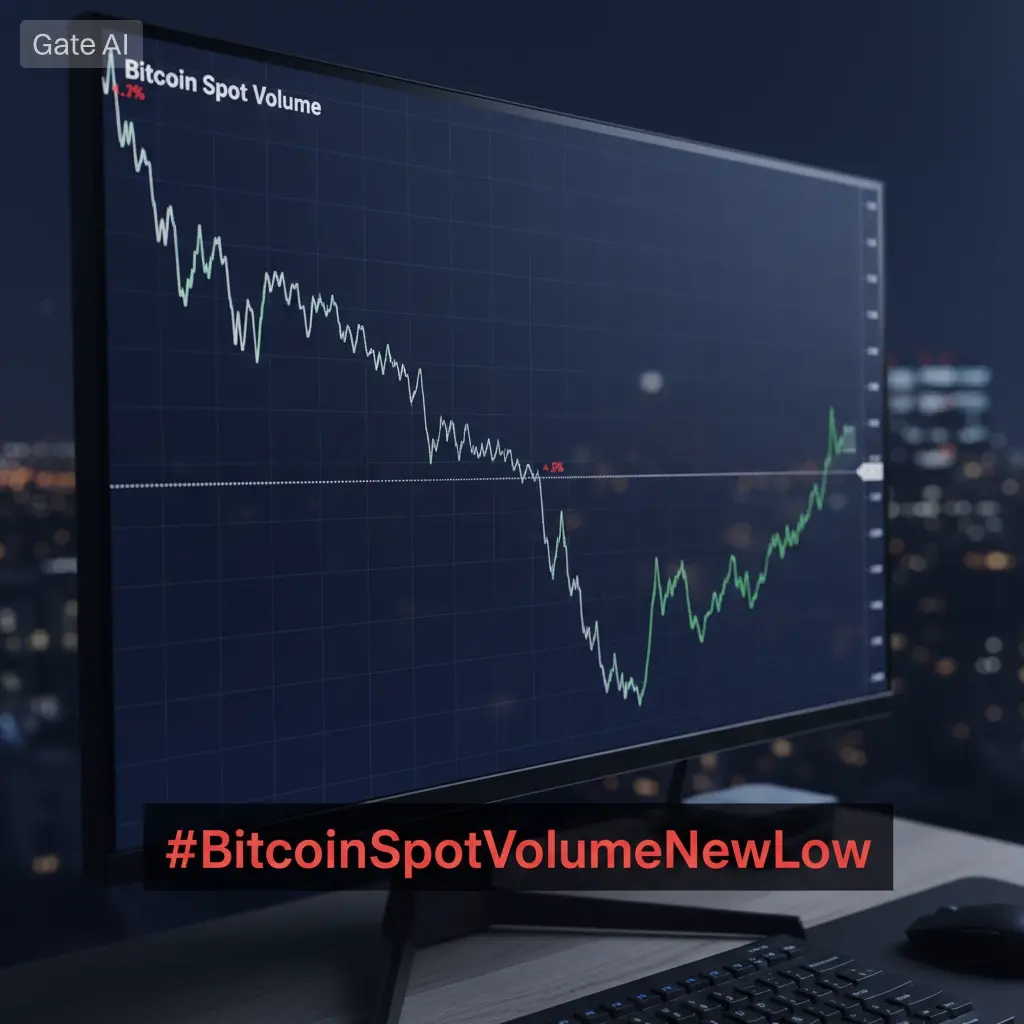
#CryptoMarketVolatility
The current has become the dominant theme, with prices moving back and forth within a range—neither forming a clear uptrend nor entering a full downtrend. This kind of sideways market often confuses traders because direction is unclear, false breakouts are frequent, and sentiment keeps shifting. One wrong move, and the market can easily trap you.
Structurally, major assets like Bitcoin tend to move between key support and resistance levels. Buyers and sellers are in balance, causing repeated price fluctuations within a defined range. When price rises, it lacks strong f
BTC0,43%
post-image
post-image
  • Reward
  • 7
  • Repost
  • Share
discoveryvip:
LFG 🔥
View More
#TradFiIntroducesMultiLeverageFirst
The rise of signals a major turning point in how global financial systems are evolving. For years, advanced leverage strategies were primarily associated with crypto markets, where flexibility and innovation allowed traders to optimize capital efficiency. Now, Traditional Finance is beginning to adopt similar multi-leverage structures—proving that the influence of crypto is reshaping even the most established financial institutions.
Multi-leverage isn’t just about increasing risk—it’s about precision. Instead of applying a fixed leverage ratio across all po
post-image
  • Reward
  • 3
  • Repost
  • Share
discoveryvip:
LFG 🔥
View More
#Gate13thAnniversaryGlobalCelebration
#Gate13周年全球庆典
It is not just a celebration—it’s a reflection of how far Gate.io has come and where the future of crypto is heading. In an industry where most platforms struggle to survive even a few cycles, reaching 13 years represents resilience, innovation, and the ability to evolve with the market. But what makes this milestone truly powerful is not the past—it’s the direction Gate is moving toward: an intelligent, AI-driven Web3 ecosystem.
Over the years, the crypto market has transformed from simple spot trading into a complex system of derivatives,
DEFI3,47%
BLUE0,46%
post-image
post-image
post-image
  • Reward
  • 3
  • Repost
  • Share
discoveryvip:
LFG 🔥
View More
#GateSquareDaily
The March 20 update from Gate.io highlights a powerful convergence of institutional growth, macro uncertainty, and evolving market structure painting a clear picture of where both crypto and traditional finance are heading next. Each data point in today’s snapshot reflects a deeper transformation: from retail-driven volatility toward institutional-grade infrastructure and strategic capital allocation.
Starting with product development, Gate’s institutional business ranking at the top underscores a critical shift in the industry. Low latency execution and deep liquidity are no
BTC0,43%
post-image
  • Reward
  • 3
  • Repost
  • Share
discoveryvip:
LFG 🔥
View More
7-Day Invite Fiesta Phase 5: Check In Daily and Earn Up to 1,100 USDT https://www.gate.com/campaigns/4324?ref=VLIXXFKJAQ&ref_type=132&utm_cmp=jS3a0EzF
post-image
  • Reward
  • 2
  • Repost
  • Share
discoveryvip:
2026 GOGOGO 👊
View More
#GateSquare #TradFiCommunity
The launch of the TradFi Community by Gate.io marks an important step toward bridging the gap between traditional finance and the rapidly evolving crypto ecosystem. This campaign is not just about rewards it’s about building a knowledge-driven community where traders, analysts, and investors can share real insights, discuss macro trends, and understand how global financial markets influence digital assets.
Traditional finance (TradFi) has always been the backbone of global liquidity, shaping interest rates, stock markets, commodities, and currencies. Now, with cryp
post-image
post-image
Gate_Squarevip
📊 Gate Square TradFi Community Campaign is Live!
The TradFi community is now officially launched!
🧧 Daily red packet rewards + exclusive Gate merch await you!
🎁 Join discussions for a chance to win official Gate giveaways
🧧 New User Bonus · Daily 50U Community Red Packets
🎁 Participate in discussions to win Gate official merchandise
🎯 How to Participate
In the TradFi community:
1️⃣ Share your TradFi market insights
2️⃣ Join discussions on TradFi topics
🎁 Each day, 1 lucky participant will be randomly selected
to win official Gate merchandise
🚀 Join the community:
https://gate.onelink.me/Hls0/group?chatroom=RPUKmyCRpk&ref=VVhBVA9a&ref_type=105
⚠️ Please update your App to version v8.11.0 or above
to access the TradFi community and participate in the campaign
repost-content-media
  • Reward
  • 2
  • Repost
  • Share
discoveryvip:
LFG 🔥
View More
🎉 Gate Live Lottery Carnival Extravaganza · Period 17 Rewards Distributed
TOP10 Bonus Rewards Sent Out Simultaneously
The top 10 users on the Heat Value Leaderboard have additionally received 2 random Gate peripherals 🎁
The new prize pool is now open, 10 GT, 2g gold awaiting your draw
👉 https://www.gate.com/activities/watch-to-earn?now_period=18
GT-0,73%
post-image
  • Reward
  • Comment
  • Repost
  • Share
  • Reward
  • Comment
  • Repost
  • Share
  • Pin