![]() Trusted Editorial content, reviewed by leading industry experts and seasoned editors. Ad Disclosure
On-chain data shows the Bitcoin mining Difficulty has seen a downward adjustment following the decline in the network Hashrate.
Trusted Editorial content, reviewed by leading industry experts and seasoned editors. Ad Disclosure
On-chain data shows the Bitcoin mining Difficulty has seen a downward adjustment following the decline in the network Hashrate.
Bitcoin Blockchain Has Eased Mining Difficulty
According to data from CoinWarz, the Bitcoin mining Difficulty has gone through a decline in the latest network adjustment. The “Difficulty” here refers to a metric built into the blockchain that controls how hard miners would find it to discover a block.
Related Reading: GameStop Locking In $76M Bitcoin Loss? Holdings Hit CoinbaseThe indicator’s value automatically changes roughly every two weeks in events called adjustments, based on how miners performed since the last such event. The blockchain follows one simple rule to adjust the Difficulty: miner blockchain production rate should converge to 10 minutes per block.
If miners find the average block in an interval greater than 10 minutes, then the network responds by raising its Difficulty just enough that these validators are slowed back down to the standard rate. On the other hand, this cohort performing slower than needed forces the blockchain to ease things up.
The latest Bitcoin Difficulty adjustment occurred on Thursday, and as the below chart shows, it resulted in a decrease for the metric.
![Bitcoin Difficulty]()
How the BTC Difficulty has changed over the last six months | Source: CoinWarz
Prior to the change, the indicator had a value of 146.47 trillion hashes. Now, it has dropped to 141.67 trillion hashes, indicating a decrease of 3.28%. This is the second-consecutive reduction in the network Difficulty.
In fact, the indicator has been in a long-term decline since November, with five of the six Difficulty changes that have occurred in the period leading to a drop in its value. Even the one adjustment that didn’t lead to a decrease in the metric had an almost neutral effect, so while the decline didn’t strengthen during it, it didn’t correspond to a change of direction either.
The reason for this long drawdown in the Bitcoin Difficulty lies in the trend witnessed by the Hashrate, a measure of the total amount of computing power connected by the miners to the network.
As data from Blockchain.com shows, the 7-day average value of the Hashrate has been going down during the last few months.
![Bitcoin Hashrate]()
The trend in the 7-day average value of the BTC Hashrate during the past year | Source: Blockchain.com
On January 18th, the 7-day average Bitcoin Hashrate fell to 978.8 exahashes per second (EH/s), its lowest level since the first half of September. The indicator has observed a rebound since this low, but its value still remains notably lower than earlier in the month.
Related Reading: Crypto ETFs Are Coming To Thailand: SEC To Launch New Rules This YearMiners’ pace tends to directly correlate with the amount of computing power that they possess, so a decline in the Hashrate usually results in a correction for the Difficulty. The continued downtrend in the former since October is why the latter has also plunged.
BTC Price
At the time of writing, Bitcoin is trading around $90,000, down more than 5% over the last week.
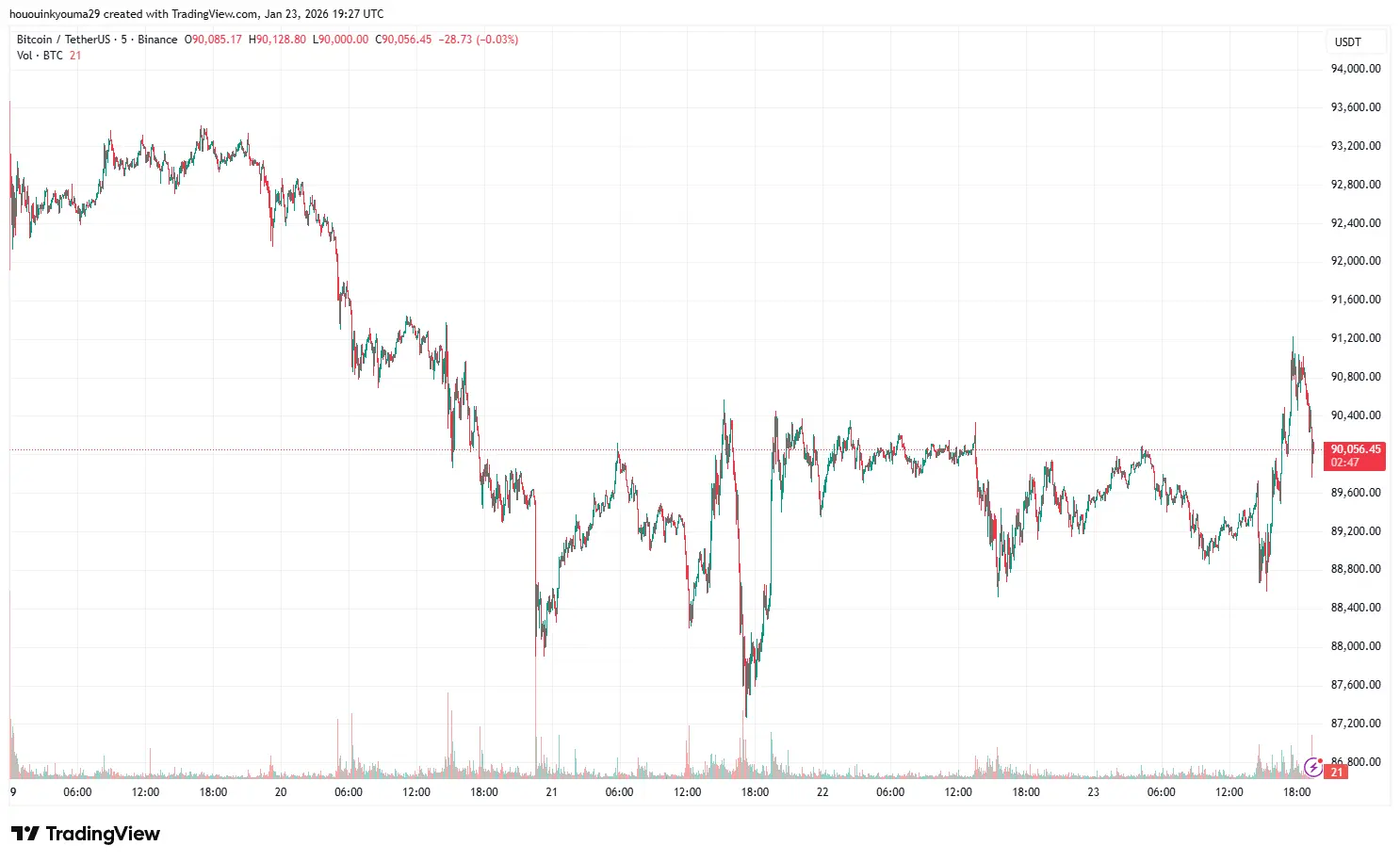
Looks like the price of the coin has gone down recently | Source: BTCUSDT on TradingView
Featured image from Dall-E, chart from TradingView.com
![]() Editorial Process for bitcoinist is centered on delivering thoroughly researched, accurate, and unbiased content. We uphold strict sourcing standards, and each page undergoes diligent review by our team of top technology experts and seasoned editors. This process ensures the integrity, relevance, and value of our content for our readers.
Editorial Process for bitcoinist is centered on delivering thoroughly researched, accurate, and unbiased content. We uphold strict sourcing standards, and each page undergoes diligent review by our team of top technology experts and seasoned editors. This process ensures the integrity, relevance, and value of our content for our readers.
Disclaimer: The information on this page may come from third parties and does not represent the views or opinions of Gate. The content displayed on this page is for reference only and does not constitute any financial, investment, or legal advice. Gate does not guarantee the accuracy or completeness of the information and shall not be liable for any losses arising from the use of this information. Virtual asset investments carry high risks and are subject to significant price volatility. You may lose all of your invested principal. Please fully understand the relevant risks and make prudent decisions based on your own financial situation and risk tolerance. For details, please refer to
Disclaimer.
Articoli correlati
BTC 15分钟上涨0.69%:现货买盘增强与链上鲸鱼持续加仓共振拉动
2026-04-17 14:30至14:45(UTC),比特币(BTC)市场出现明显异动,15分钟K线收益率达+0.69%,价格区间在77455.4至78044.4 USDT,振幅0.76%。短线波动带动市场关注度抬升,交易量同步放大,流动性进一步提升。
本次异动的主要驱动力是现货市场买盘明显增强。根据链上和统计数据,14:00–15:00期间BTC现货买盘占优,巨额买单持续推升价格,同时鲸鱼地
GateNews1h fa
BTC 突破 78000 USDT
Gate News bot 消息,Gate 行情显示,BTC 突破 78000 USDT,现价 78000 USDT。
CryptoRadar1h fa
Sui Targets South Korea for Financial Partnerships, Plans Won-Pegged Stablecoin and Bitcoin Products
Sui, a Layer 1 blockchain project, aims to expand in South Korea by collaborating with financial institutions and technology companies. Key initiatives include developing a stablecoin pegged to the won and enhancing its developer ecosystem with the Move programming language.
GateNews1h fa
Smart Trader pension-usdt.eth Faces $15.5M Loss on BTC and ETH Short Positions Amid Market Rally
Gate News message, smart trader pension-usdt.eth is currently experiencing losses exceeding $15.5 million on short positions of 1,000 BTC (valued at $77.5 million) and 20,000 ETH (valued at $48.7 million) due to the market rally. The trader's total profit has decreased from $33.28 million to $14.98
GateNews1h fa
Whale Liquidates $90M BTC Short Position on Hyperliquid, Suffers $5.39M Daily Loss
A major trader liquidated 1,184.74 BTC, worth around $90 million, to mitigate liquidation risk amid a BTC price surge, incurring a $5.39 million loss. Year-to-date losses for the account now total $43.81 million.
GateNews1h fa
BTC 15分钟上涨0.58%:衍生品杠杆流入与鲸鱼资金调仓共振推升价格
2026-04-17 13:45 至 14:00(UTC),BTC价格短线收益率达+0.58%,区间成交价格在76626.0至77412.2 USDT之间,振幅1.02%。期间市场波动小幅加剧,资金活跃度提升,行业关注度明显升温。
本次异动的主要驱动力是衍生品市场的杠杆资金集中流入。24小时内,BTC期货及永续合约总持仓量激增8.09%,达创纪录的508亿美元。杠杆资金快速入场,推动价格短线走强
GateNews1h fa


